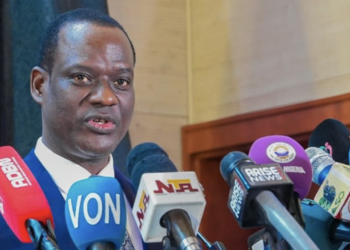
Nigeria’s Infrastructure Concession Regulatory Commission (ICRC) has handed ministries, departments, and agencies (MDAs) the power to approve public-private partnership (PPP) projects valued at up to ₦20 billion ($13 million), a move the government said will speed up infrastructure delivery and deepen private sector participation.
ICRC director-general Michael Ohiani, said the policy, which decentralises decision-making, is designed to cut delays that have long plagued the PPP approval process. “This is not a withdrawal of the commission’s oversight. We are empowering MDAs to move faster, while the ICRC continues to ensure that transparency, accountability, and value-for-money remain the benchmarks,” he said.
Until now, all PPP projects regardless of size, required ICRC’s central approval, often resulting in months-long bottlenecks that discouraged private investors. Under the new framework, MDAs will independently evaluate and greenlight projects below ₦20 billion, while the commission retains direct control over mega projects above the threshold.
Stakeholders at the policy briefing welcomed the step as a “game-changer” for Nigeria’s infrastructure gap. “If properly implemented, this will unleash long-stalled investments, especially in projects that don’t require mega financing,” one infrastructure consultant said. But others cautioned that decentralisation without strong monitoring could invite abuse.
The ICRC has committed to training MDA officials on PPP evaluation and has promised quarterly reviews of all projects approved under the new arrangement to guard against misuse.

Saturday, September 26, 2026
ICRC Hands MDAs PPP Approval Powers Below ₦20bn