

When Procter & Gamble (P&G) announced in 2023 that it would shut down its Nigerian manufacturing operations and rely solely on imports, the news reverberated across Nigeria’s industrial landscape. To many industry watchers, it was more than just the exit of a multinational from factory operations; it was a red flag highlighting the structural headwinds facing manufacturers in Africa’s largest economy.
The shutdown underscored the persistent obstacles: foreign exchange shortages, energy crises, weak infrastructure, high cost of financing, and policy uncertainties that often frustrate long-term investment in local production. For some, the development reinforced the argument that manufacturing in Nigeria is untenable.
But for Engr. Olaniyi Adebajo, a Nigerian-Canadian manufacturing engineer and former P&G leader, the moment was not a call to surrender. Instead, it was an invitation to rethink the fundamentals of how factories are designed, commissioned, and operated in fragile environments like Nigeria’s. His response has since taken shape as a tested framework—a playbook—that offers Nigerian manufacturers a pathway to resilience.

Adebajo’s perspective is not theoretical. It was forged on the shop floor in P&G Ibadan plant, Oyo State, where he began his career with P&G Nigeria. Starting as a Reliability and Initiatives Engineer, he demonstrated an ability to translate PQCDSM (Productivity, Quality, Cost, Delivery, Safety, Morale) from corporate jargon into measurable, daily performance indicators.
Within just 18 months, his work produced tangible results: US$250,000 in cost savings, a 10-point improvement in line reliability, record-breaking production volumes, and a perfect 100 percent On-Time-In-Full (OTIF) delivery rate for both Make-to-Order and Make-to-Stock demands. By the time he became Production Manager, he was leading multi-shift, unionised operations, embedding a culture of cost discipline, reliability, and continuous improvement into the plant’s operations.
These results earned him the prestigious P&G CEO Award, confirming him as one of the company’s standout performers. Yet beyond awards, it was his insistence on the principle that “reliability is not an accident; it is designed, measured, and enforced daily” that defined his leadership style.
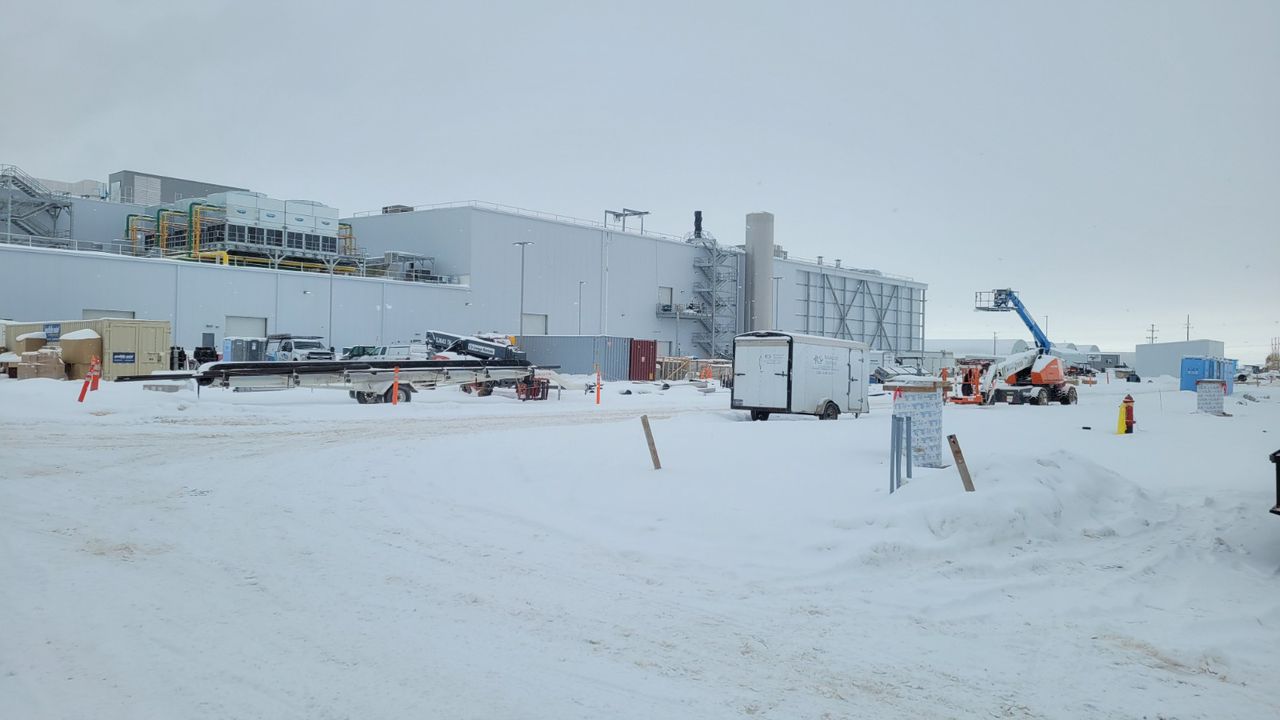
In 2012, Adebajo moved from plant-level operations to regional and global assignments. He became Regional Start-Up Leader, guiding new projects in Cairo and Lagos, before playing a critical role in P&G’s US$300 million Agbara greenfield plant—one of the largest manufacturing investments in Nigeria at the time.
He later managed the start-up of the ₦4.8 billion Pampers Baby-Dry variant line, a project that not only modernised diaper production in Nigeria but also created over 2,000 direct jobs and boosted government revenues through taxes and supply-chain spillovers.
His expertise subsequently took him abroad, where he managed a US$415million fry-line expansion project for Lamb Weston Inc, with a capacity of 352 million pounds per year. This project was notable for its breadth: beyond food production, it involved wastewater modernisation, cold-storage readiness, and retail-packaging flexibility. Remarkably, the project achieved a vertical start-up in just three months—a pace virtually unheard of in projects of such scale.
“Vertical start-up isn’t a date on a Gantt chart,” Adebajo explains. “It is a discipline that turns capital expenditure into real production capacity.”
Four Truths from the Factory Floor
From years of building and stabilising factories across different environments, Adebajo distilled four operational truths that he argues are essential for Nigerian manufacturing resilience:
Flexibility is a design choice
Markets like Nigeria’s punish rigidity. Demand patterns shift suddenly, and plants that cannot adapt quickly are vulnerable. Adebajo advocates modular, scalable production lines with tool-less changeovers and layouts that allow re-routing. “Two flexible lines will often beat one giant one when demand whipsaws,” he insists.
Engineer for utility independence
With grid instability and inadequate municipal systems, factories must be self-reliant. His principle is clear: design utility “islands” with dual-fuel power systems, on-site water treatment and reuse facilities, and effluent handling aligned to industrial-park standards.
Reliability is built, not wished
Operational excellence requires daily discipline. Adebajo emphasises PQCDSM routines, rigorous root-cause analysis, Mean Time Between Failures (MTBF) and Mean Time to Repair (MTTR) tracking, and first-time-right quality enforcement. Without these, throughput gains often turn into scrap.
Vertical Start-Up is the bridge from spend to output
Capital expenditure only delivers value when it is converted into production capacity. To compress timelines, he sets up train-the-trainer ladders, trial lots, and OTIF targets before the first sellable unit is produced.
A Nigeria-Ready Playbook
The Adebajo playbook is structured into three phases that manufacturers can adopt for greater resilience:
Before You Build: scenario-test plant layouts for base, low, and high-demand scenarios; specify modular equipment; plan for utility independence; and leave room for reconfiguration and cold-chain expansion.
While You Ramp: run strict vertical start-up routines; launch initially with a limited SKU set; tie failure modes to accountable owners with deadlines; and stabilise changeovers before widening output.
At Steady State: protect the production rhythm with live Standard Operating Procedures; publicly track OTIF as both a health score and a market promise; and conduct weekly reviews of the six big losses—breakdowns, minor stops, speed losses, changeovers, scrap, and energy inefficiencies.
This framework, he argues, allows manufacturers not just to survive but to thrive in volatile environments.
Case Study: Flexibility in Action
On the US$415million fry-line project, Adebajo insisted on flexibility from the outset. Retail-pack versatility, wastewater modernisation, and cold-storage readiness were all embedded into the plant’s footprint at the design stage.
While these choices appeared costly in the short term, the payback came in resilience: when market dynamics shifted, the plant could adapt swiftly without major retrofits. This flexibility enabled the project to achieve a record-setting three-month vertical start-up.
The lesson, Adebajo says, is straightforward: “What seems expensive during capital expenditure pays back many times over in operational resilience.”
Lessons for Nigerian Industry
For Nigerian manufacturers grappling with FX scarcity, high energy costs, and weak infrastructure, Adebajo’s playbook is more than an engineering framework—it is a strategic imperative.
Asked what lesson P&G’s exit should teach local players, Adebajo is unequivocal: “Scale without flexibility is fragile. Plants must adapt fast or they break.”
On delivery, his focus remains unwavering: “OTIF is not just a metric—it is a market promise. Break it, and you lose trust.”
Policy Implications
Adebajo’s framework also holds implications for policymakers. If Nigeria is serious about reversing de-industrialisation, government and regulators must provide a supportive environment where private-sector innovations can flourish.
This includes stabilising foreign exchange policies, incentivising modular and flexible production systems, investing in reliable industrial parks with shared utilities, and supporting training programmes that deepen the skills base of factory workers.
Without these interventions, more multinationals may follow P&G’s path, relying on imports rather than enduring the cost and complexity of producing locally. But with them, Nigeria can retain and even attract industrial investors willing to adapt to its challenging but potentially rewarding market.
Nigeria’s manufacturing story does not have to be one of retreat and collapse. The experience of Engr. Olaniyi Adebajo demonstrates that with discipline, foresight, and engineering rigour, plants can withstand shocks and turn volatility into competitive advantage.
His playbook is blunt but powerful: design for flexibility, commission for independence, operate for reliability.
As Nigeria seeks to build a more resilient industrial base, lessons from practitioners like Adebajo are invaluable. In his own words: “Excellence in Nigeria isn’t imported. It’s engineered.”