The federal government has set the second quarter of 2026 as its target timeline to roll out the long-awaited National Automotive Industry Development Policy (NAIDP), signalling a renewed push to overhaul Nigeria’s auto sector and progressively curb the influx of used vehicles, popularly known as tokunbo.
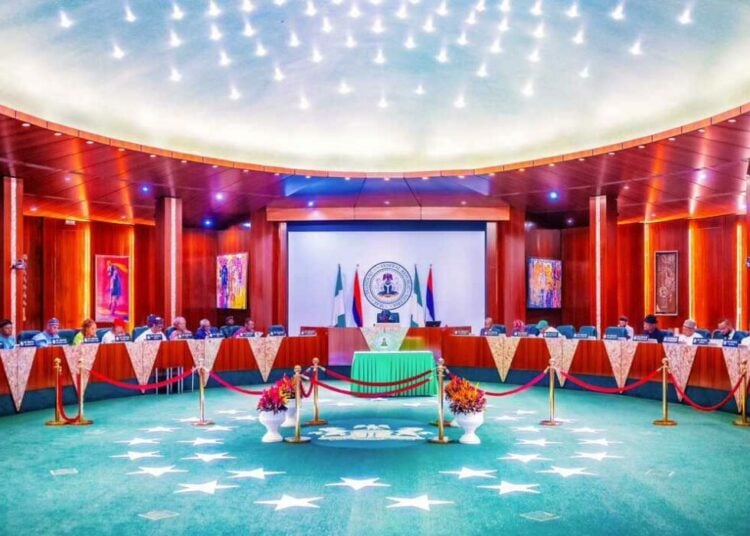
The move follows the recent approval of the Nigeria Industrial Policy (NIP) by the Federal Executive Council (FEC), which now serves as the overarching framework for the country’s industrial transformation agenda, pending legislative backing by the National Assembly.
As part of the reforms, government is weighing tougher controls on the importation and use of second-hand vehicles, a strategy aimed at stimulating local vehicle assembly, improving road safety standards and addressing environmental concerns linked to aging automobiles.
The Minister of State for Industry, Senator John Enoh, made this known at the 18th Nigeria Auto Journalists Association (NAJA) International Auto Awards held at the Oriental Hotel, Victoria Island, Lagos. He stressed that the focus has shifted to securing legislative approval for the auto policy to give it full legal force.
Represented by the Director-General of the National Automotive Design and Development Council (NADDC), Otunba Oluwemimo Joseph Osanipin, the minister said the approval of the Nigeria Industrial Policy marked a significant milestone in repositioning the industrial sector, with the automotive industry identified as a priority area.
“The Nigeria Industrial Policy has received Federal Executive Council approval and now provides direction for our industrial growth. The next critical step is the passage of the Auto Policy into law. These actions are deliberate and targeted at giving the automotive sector the attention it deserves,” he said.
Osanipin confirmed that the NAIDP Bill has advanced significantly within the legislative process, noting that NADDC is intensifying engagement with lawmakers to fast-track its passage.
He assured industry stakeholders that the Council remains committed to enforcing standards that ensure only quality vehicles enter the Nigerian market, while expanding domestic manufacturing capacity.
“One of our major goals is to have the Auto Policy enacted by the second quarter of 2026. We are working closely with the National Assembly, and stakeholders will be actively involved, especially during the public hearing process,” Osanipin said.
He also disclosed that NADDC plans to begin a phased withdrawal of used vehicles from the market as part of broader efforts to deepen local automotive production.
According to him, the Council introduced Nigeria’s End-of-Life Vehicle (ELV) Recycling Regulation in March 2025 to support a circular economy, generate jobs, promote environmental sustainability and enhance road safety through the structured dismantling and recycling of obsolete vehicles.
Osanipin praised NAJA for sustaining a platform that promotes industry excellence and stakeholder collaboration, describing the awards as a valuable forum for engagement between industry players and the media.
“NADDC is proud to be associated with this initiative because it brings together key stakeholders and helps drive conversations around growth, standards and job creation in the automotive industry,” he said.
Earlier, NAJA chairman, Mr. Theodore Opara, said the annual awards have become a key benchmark for performance in the sector, noting that resilience has emerged as a defining trait of the industry amid global supply chain challenges, energy transition pressures and ongoing policy reforms.
Opara explained that winners were selected through a transparent and rigorous evaluation process based on professionalism, relevance and measurable impact, adding that despite economic headwinds, Nigeria’s automotive players have continued to show innovation, adaptability and strategic strength.
Tuesday, September 29, 2026
FG Targets Q2 2026 Rollout Of Auto Policy