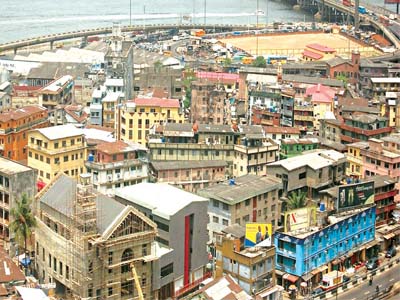
The Lagos State government is considering the development of new towns to cope with rapid population growth, acute land constraints, and overstretched infrastructure, describing the plan as an urgent response to accelerating urbanisation and mass migration into the state.
Commissioner for physical planning and urban development, Dr Oluyinka Olumide, said Lagos’ demographic expansion has far outpaced conventional urban planning models, placing unprecedented pressure on housing, transportation, and public services.
“Lagos, with an estimated population of 25 million people occupying just 0.4 per cent of Nigeria’s landmass, faces congestion levels that demand innovative and deliberate planning,” Olumide said.
He noted that sustained migration from other parts of Nigeria and abroad continues to intensify demand on the state’s already strained physical and social infrastructure.
According to the commissioner, overcrowding in established districts has fueled unregulated settlements and urban sprawl, increasing environmental risks and threatening long-term liveability.
He said the creation of new towns offers a structured way to redistribute population growth and open up less-developed areas in an orderly manner.
“Developing new towns allows us to manage growth proactively rather than react to congestion after it has already become unmanageable,” Olumide said.
He explained that the government is reviewing operational development plans, expanding physical planning schemes, and strengthening collaboration with private developers to ensure that emerging communities follow approved layouts.
The aim, he said, is to avoid the haphazard development patterns that have historically led to the creation of slums and inadequate infrastructure.
Environmental considerations are also central to the initiative. Olumide cited disruptions to natural drainage systems in parts of Lagos Island and other districts, which have left communities increasingly vulnerable to flooding. He said the proposed new towns will feature modern drainage networks, climate-resilient designs, and protected corridors to reduce environmental risks.
Beyond housing, the strategy prioritises access to education, transportation, healthcare, and other essential services along designated growth corridors. Private-sector partnerships are expected to support the development of technology hubs, industrial parks, and tourism facilities. Lagos is also working with neighbouring Ogun and Ondo states to deepen regional integration and ease population pressure on the metropolis.
Urban development experts say the government’s approach reflects how Nigeria’s population boom is reshaping the real estate sector.
Prof. Franklin Ngwu of Lagos Business School warned that decades of weak urban planning have left the country poorly prepared for rapid demographic expansion.
He said properly designed new towns, integrating housing, transport, commerce, and recreation, offer a practical response to overcrowded cities.
“The real estate sector currently contributes about 12.8 per cent to Nigeria’s GDP, but coordinated planning and large-scale developments can unlock far greater economic value,” Ngwu said.
He cited university towns, transport-linked suburbs, and master-planned communities as projects capable of creating jobs, expanding markets, and strengthening value chains.
UPDC Plc Chief Executive Officer, Odunayo Ojo, said Lagos’ congestion has reached levels that make the development of new towns unavoidable.
“Corridors such as the Lekki–Epe Expressway already show the limits of our existing urban centres,” Ojo said. “New towns provide a realistic pathway to ease pressure on residents and businesses, but they must be driven by innovation and disciplined planning.”
The discussions highlighted that Lagos’ experience reflects a wider national challenge. Nigeria, Africa’s most populous country, now has more than 220 million people and is growing at an estimated annual rate of 2.6 per cent. Analysts warn that without proactive planning, housing deficits, rising property prices, and overstretched infrastructure will deepen social and economic strains.
For the real estate industry, the population surge presents both risks and opportunities. While housing shortages and affordability concerns persist, sustained population growth guarantees demand for residential, commercial, and mixed-use developments. Developers who prioritise sustainability, technology, and integrated urban design are likely to benefit while supporting Nigeria’s evolving demographic realities.
As Lagos moves ahead with its new towns agenda, the policy signals a growing recognition that population growth is not merely a social concern, but a defining force shaping the future of the city, and Nigeria’s real estate market at large.

Sunday, October 18, 2026
Lagos Plans New Towns To Decongest City