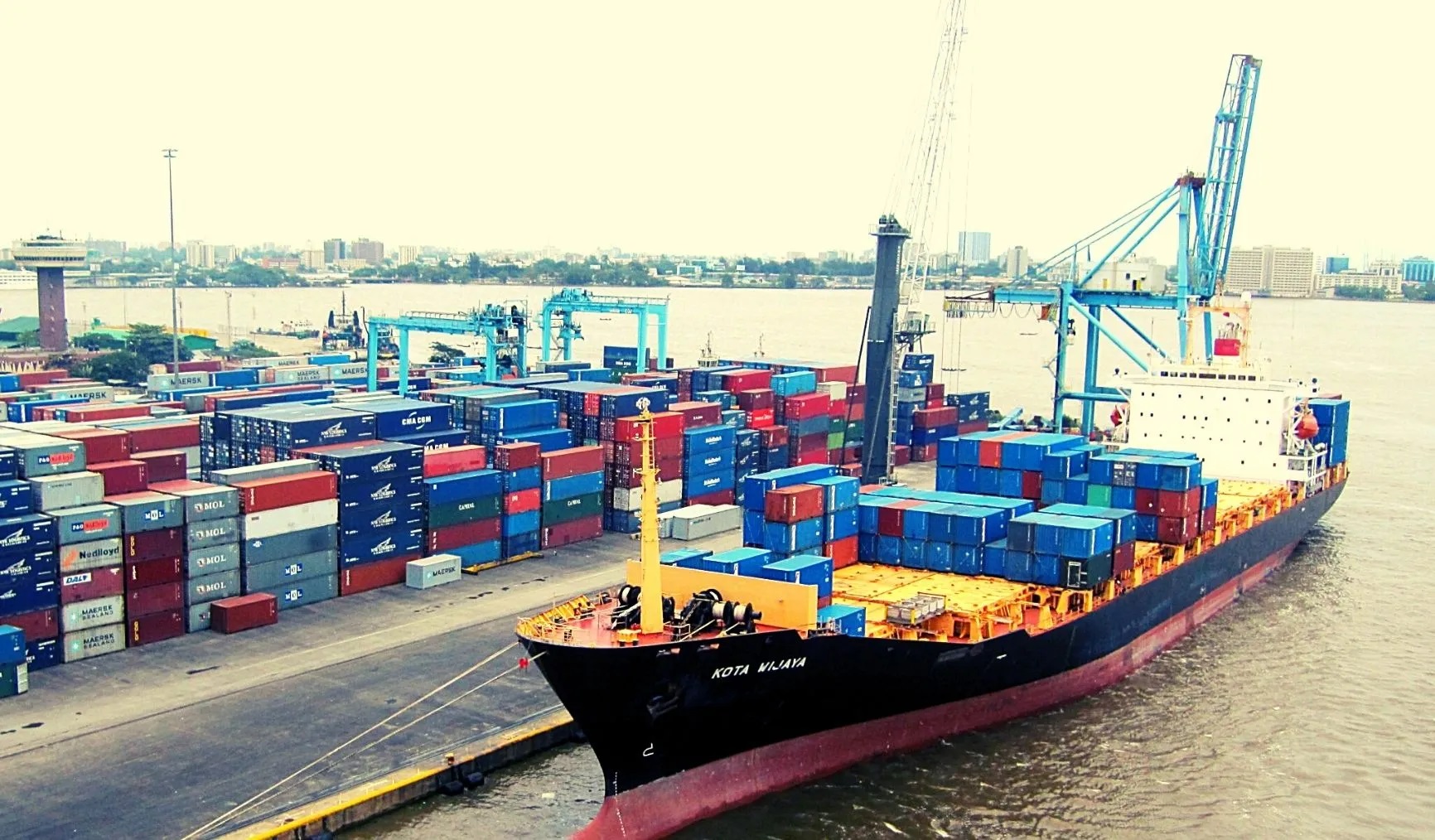
Experts in Nigeria’s maritime sector have warned that persistent policy gaps, weak institutional coordination and lack of technical sovereignty are undermining the country’s ability to unlock an estimated N1 trillion annual potential in the marine and blue economy.
Their concerns come despite the federal government’s unveiling in 2025 of Nigeria’s first National Policy on Marine and Blue Economy, a framework designed to reposition the maritime sector as a major pillar of economic diversification.
The minister of marine and blue economy, Dr. Adegboyega Oyetola, had described the policy as a strategic roadmap to drive sustainable fisheries, aquaculture, marine tourism, offshore renewable energy and shipping development.
The policy, he said, aims to deepen local content, reduce import dependence, boost job creation and ensure environmental sustainability across Nigeria’s coastal and inland waterways.
However, industry stakeholders argue that policy pronouncements have not translated into measurable outcomes.
They cautioned that without urgent structural reforms, Nigeria risks forfeiting billions of dollars in sustainable revenue, millions of potential jobs and its strategic ambition to serve as the maritime hub of West and Central Africa.
According to them, repeated announcements without concrete implementation timelines, performance benchmarks and accountability mechanisms have weakened stakeholder confidence and public trust in government initiatives.
Speaking, the national chairman of the Nigeria Institution of Maritime Engineers and Naval Architects (NIMENA), Dr. Eferebo Sylvanus, said Nigeria’s inability to generate at least N1 trillion annually from the sector reflects structural and policy weaknesses that go beyond mere documentation.
According to him, while Nigeria possesses one of Africa’s most active maritime environments driven largely by oil and gas operations, extensive inland waterways and a long Atlantic coastline, the country lacks the technical independence required to maximise its potential.
“We are politically sovereign but not technically sovereign,” Sylvanus stated. “We still rely heavily on foreign technical expertise, foreign certification systems and foreign standardisation frameworks.
“We cannot fully certify our tools locally, our engineers and cadets must obtain foreign certifications before they can operate globally. That is a structural weakness.”
He warned that without developing indigenous certification systems, engineering standards and maritime technical capacity, Nigeria would continue exporting value while importing expertise at significant cost.
Sylvanus advocated the development of a clearly defined national maritime vision, backed by structured human capital development and deliberate investment in local research, ship design, vessel construction and marine engineering capabilities.
He also called for a national roundtable involving government, industry operators, academia and regulators to harmonise a long-term maritime development blueprint.
Echoing similar concerns, the head of research at the Sea Empowerment and Research Center (SEREC), Dr. Eugene Nweke, said Nigeria’s blue economy losses are far more substantial than publicly acknowledged.
He estimated that weak policy implementation, poor enforcement of maritime laws, underutilisation of related industries and systemic revenue leakages cost the country over $20 billion annually.
In addition, he said Nigeria loses about $3 billion yearly to smuggling, illicit trade and other maritime-related criminal activities.
Nweke recalled that the Nigerian Maritime Administration and Safety Agency (NIMASA) had previously projected that Nigeria’s blue economy could generate over $20 billion annually if properly harnessed. Yet, the gap between projections and actual performance remains wide.
“The potential is not in doubt. What is missing is coordinated execution, enforcement discipline and political will,” he said.
SEREC further highlighted Nigeria’s underperformance in maritime manpower export. While countries like the Philippines generate approximately $6 billion annually from seafarer remittances, Nigeria with its vast youth population has not built a comparable maritime labour export strategy.
Despite having thousands of maritime graduates and cadets, limited sea-time opportunities, inadequate training infrastructure and lack of structured international placement frameworks have constrained Nigeria’s competitiveness in the global seafaring market.
The research centre noted that if properly structured, Nigeria could replicate the Philippines’ model, generating billions in foreign exchange while reducing youth unemployment.
Stakeholders also identified industrial underdevelopment as a major bottleneck. The collapse of the Ajaokuta Steel Complex and related steel plants has significantly weakened Nigeria’s shipbuilding and ship repair capabilities.
Without a functional domestic steel industry, experts argue, efforts to build shipyards, maintain marine infrastructure and expand port facilities remain constrained and heavily import-dependent.
SEREC stressed that the absence of an integrated maritime-industrial ecosystem continues to erode Nigeria’s competitiveness, particularly in West and Central Africa despite being the region’s largest economy and the current Chair of the World Customs Organisation (WCO) Council.
Another major concern raised is the weak enforcement of the Cabotage Act and Local Content Law, which were designed to reserve domestic shipping and offshore trade for Nigerian-owned and crewed vessels.
According to SEREC, foreign vessels still dominate cabotage operations, leading to capital flight, export of maritime jobs and reduced opportunities for indigenous operators.
The centre warned that unless enforcement is strengthened, Nigeria will continue losing economic value within its own territorial waters.
Lastly, to reverse the trend, SEREC recommended the establishment of a Blue Economy Delivery Unit under the Presidency. The unit, it said, should operate with clear Key Performance Indicators (KPIs) tied to GDP contribution, employment generation, revenue growth and export earnings.

Saturday, October 17, 2026
Blue Economy: Nigeria’s N1trn Revenue Potential Hampered By Persistent Hurdles