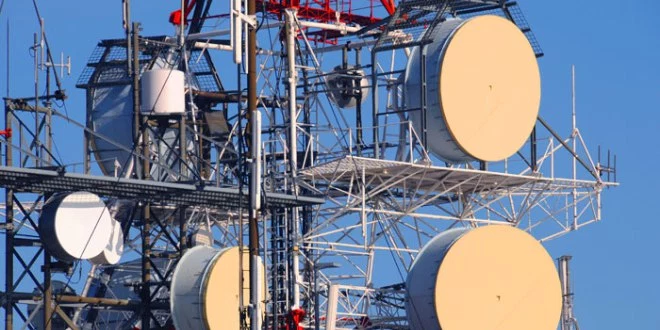
Nigeria’s telecommunications sector has recorded a sharp 91 percent decline in foreign investment, falling to $7.24 million in the first quarter (Q1) of 2026 from $80.78 million in the same period of 2025, according to the National Bureau of Statistics (NBS).
The NBS disclosed this in its latest quarterly capital importation report, noting that the $7.24 million inflow represents just 0.07 per cent of the total $10.37 billion foreign capital brought into the Nigerian economy during the quarter under review.
The latest figure also reflects a steeper 96.2 per cent drop when compared with the $191.57 million recorded in Q1 2024, highlighting a sustained downturn in foreign capital allocation to the sector over the period.
The decline comes despite policy efforts aimed at improving investment inflows, including a tariff adjustment approved for telecommunications operators by the Nigerian Communications Commission (NCC) in January 2025.
The NCC’s decision marked the first major tariff increase since 2013, and was intended to help operators expand infrastructure and improve service delivery in the country’s fast-growing digital economy.
Minister of Communications, Innovation and Digital Economy, Bosun Tijani, had previously defended the adjustment, saying it would enable telecom operators to “invest in new infrastructure and improve connectivity.”
However, the new data suggests that investor confidence in the sector has continued to weaken despite the policy intervention.
A broader review of sectoral performance shows that several productive segments of the economy also experienced mixed or declining capital inflows when compared with 2024 levels.
The production and manufacturing sector attracted $152.27 million in Q1 2026, an increase from $129.92 million in Q1 2025, but still below the $191.52 million recorded in Q1 2024.
The trading sector recorded $65.79 million in inflows, up from $34.39 million in Q1 2025, but significantly lower than the $494.33 million posted in Q1 2024.
The electrical sector saw one of the steepest contractions, with inflows dropping to $2.7 million in Q1 2026 from $9.03 million in Q1 2025 and $58.93 million in Q1 2024.
Information technology services also followed a similar trend, attracting $11.33 million in Q1 2026, compared to $7.21 million in Q1 2025 and $171.70 million in the corresponding period of 2024.
In contrast, the banking and financial services sectors continued to dominate capital importation, drawing the bulk of foreign inflows during the period.
The NBS report showed that the banking sector attracted $7.55 billion in Q1 2026, accounting for 72.79 percent of total capital imported into the country, while financial services received $2.43 billion, representing 23.42 percent of the total inflows.

Friday, August 14, 2026
Nigeria’s Telecoms Sector Records 91% Decline In Foreign Investments