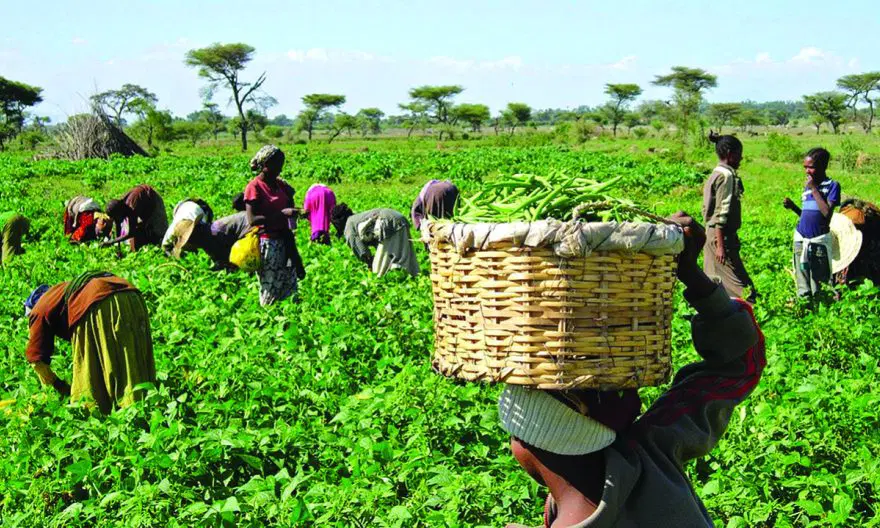
Local farmers and agricultural experts have attributed Nigeria’s growing dependence on food imports to insecurity in farming communities, calling on the government to prioritise the safety of farmlands and rural communities.
They spoke in separate interviews on Sunday in Lagos, while reacting to data from the Central Bank of Nigeria showing that food imports stood at $2.34 billion in 2025.
The general secretary of the All Farmers Association of Nigeria (AFAN), Mr Femi Oke, described the country’s increasing reliance on imported food as discouraging to local farmers.
Oke said food commodities that could be produced locally should not be imported, noting that such a trend undermined efforts to boost domestic agricultural production.
“As an association, we are not happy about the constant importation of food into the country, especially commodities that can be produced locally.
“We believe only a few products, such as dairy items that require specialised storage facilities, may justify importation.
“Continuous importation of food that should be grown locally discourages farmers and weakens efforts to achieve food security.
“We have consistently urged the government to discourage excessive food imports and empower local farmers to increase production,” he said.
According to him, Nigeria should not depend on external sources for food if it is serious about attaining food security.
Also speaking, an agricultural communication expert, Dr Ismail Olawale, said sustainable agricultural development required more than increased budgetary allocations.
According to him, issues such as rural development, security, logistics and infrastructure are critical to achieving food security.
“We need to stop paying lip service to agricultural development. Sustainable growth in the sector goes beyond budgetary allocations.
“Many rural communities that produce food are underdeveloped and increasingly vulnerable to attacks by bandits and other criminal elements.
“The government must develop strong security networks and surveillance systems while ensuring that roads connecting farms to markets are accessible and safe,” he said.
Olawale noted that focusing solely on agricultural budgets without addressing insecurity and poor infrastructure would yield limited results.
He added that agricultural development required a holistic approach encompassing security, transportation, education and social development.
“Food importation is not a sustainable solution to food security.
“When agriculture works, it stimulates improvements in security, logistics and other sectors because they are interconnected,” he said.
Similarly, the National Publicity Secretary of the Poultry Association of Nigeria, Mr Godwin Egbebe, said insecurity had forced many farmers to abandon farming and migrate to urban areas in search of alternative livelihoods.
Egbebe said the development had reduced food production and increased the country’s dependence on imported food.
“The best way to reduce food imports and achieve food security is to address insecurity on our farms.
“Many farmers have left agriculture because of safety concerns, resulting in lower food production.
“Injecting billions of naira into the sector will achieve little if farmers cannot safely access their farmlands,” he said.
The stakeholders urged the government to strengthen security in farming communities, improve rural infrastructure and create an enabling environment for farmers to boost local food production and reduce dependence on imports.

Monday, October 26, 2026
Farmers Lament $2.34bn Import Bill, Seek Improved Farm Security