
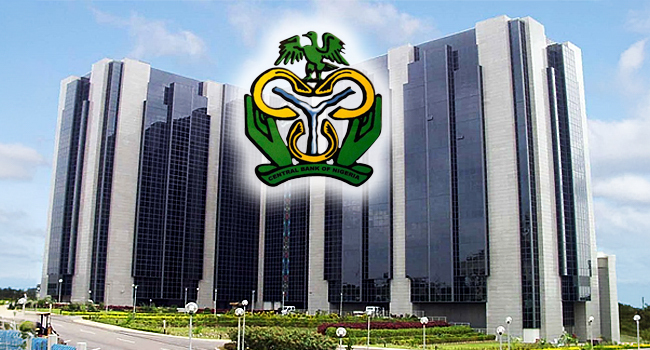
President Tinubu has a knack for appointing notable and result oriented technocrats into strategic positions, even from his days as the governor, Lagos State.
As the governor of Lagos State, he appointed the present governor, Central Bank of Nigeria( CBN), Olayemi Cardoso, as the commissioner, Economic Planning and Budget, which was the think-tank of the administration.
Among other notable projects, Cardoso pioneered the independent tax reforms of the state and he was honoured with the Lagos State Good Governance Award for Innovative Thinking.
President Tinubu appointed Cardoso as the 12th CBN governor in September 15, 2023, and he was officially confirmed in September 23, 2023.
Cardoso is Harvard – trained and a distinguished banker, Fellow of Chartered Institute of Stockbrokers and notable public policy expert.
He had worked in Chase Merchant Bank, an affiliate of Chase Manhattan, and in Citbank where he later became the Chairman.
Also, recently, President Tinubu appointed Dr Bala Mohammed Bello as Special Adviser on Political Economy. Prior to his appointment, Dr Bello who holds a PhD in Leadership and Management was a deputy governor, Corporate Services in Central Bank of Nigeria and a member of the Monetary Policy Committee( MPC) of the Bank.
The Monetary Policy Committee evaluates economic indicators and regularly review domestic and global economic data to make informed decisions. They formulate monetary policy by managing interest rates and controlling money supply.
President Tinubu and CBN have worked dedicatedly to achieve improved macroeconomic fundamentals and economic stability and growth though there are still more challenges to overcome going forward.
The International Monetary Fund( IMF) acknowledged that the economic reforms of President Tinubu and CBN have significantly strengthened macroeconomic stability and improved the country’s resilience to external shocks.
In a report, the Resident Representative for the IMF in Nigeria, Dr Christian Ebeke, noted that the reforms were helping Nigeria to withstand global economic shocks.
Dr Ebeke noted that “despite significant volatility in global markets, the naira in the parallel market is trading at levels that are relatively close to the official market rate.”
He added that the development “is a clear indication that progress has been made in restoring macroeconomic stability and that Nigeria’s economy has become more resilient to external shocks.”
The former minister of finance and coordinating minister of the economy and who is now the director- general, World Trade Organisation( WTO), Dr. Ngozi Okonjo-Iweala, had also earlier commended President Tinubu for the stability of the economy and noted that the reforms were in the right direction and that what was needed next was growth.
Indeed the economy has recorded growth as data from the National Bureau of Statistics( NBS) showed that the GDP grew by 4.07 per cent year-on-year in the Q4 2025 which was higher than the 3.76 per cent growth in the corresponding period in 2024.
Overall the economy grew by 3.87 percent in 2025 compared to 3.38 percent in 2024 and it has been projected that the economy would grow by 4.1 percent in 2026 and further to 4.3 percent in 2027.
Naira appreciated against the dollar since the beginning of the year 2026 even as CBN also achieved disinflation which was also commended by the IMF. And now the apex Bank is targeting single-digit inflation.
CBN is well connected with the challenges of the economy and has demonstrated creativity in finding ingenious solutions to the challenges.
The Bank has been active in managing monetary policies particularly exchange rate and it has generated foreign capital inflows through increases in interest rates and which has helped to stabilise the exchange rate and boosted foreign reserves.
World Bank commended the leadership of the CBN governor Olayemi Cardoso, and endorsed the Bank’s policy to stabilise the naira and improve the foreign exchange market, transparency, foreign capital inflows and the economy.
A notable expert and CEO, Financial Derivatives Company( FDC) and chairman FCMB Plc, Mr Bismark Rewane, also noted that CBN policies were yielding results.
Rewane was particularly impressed with the “de-segmentation of ambiguities and reduction of speculative instincts and market arbitrage and ensured stability.”
Cardoso and his team assumed office at a critical period when the economy was very unstable and deep in the trough.
They inherited complex challenges partly due to blunders and mismanagement of the previous administration and partly due to the inherent structural challenge of the economy.
On assumption of office, Cardoso refocused CBN strictly to its primary functions of determining interest rate, directing money supply, formulating monetary policy, managing foreign reserve and advising the federal government.
President Tinubu and Cardoso have demonstrated the benefits of strategic policies combination and aligning fiscal policies and monetary policies though there are still discrepancies arising mainly from the fiscal side and which has tended to create a paradox.
The paradox is that though the economy achieved stability and growth and other positive developments which were commended by notable experts and international institutions, there is still pervasive poverty.
In x-raying the development, the CEO, Financial Derivatives Company, Bismark Rewane noted in his presentation during the May edition of Lagos Business School Breakfast Session, that “sectoral linkages are weak, growth is not employment-elastic and the gains of aggregate expansion are not reaching the average household.”
Rewane also noted that the country’s debt per head was increasing faster than income per capita and projected that Nigeria’s inflation would rise between 17.0 percent and 20 percent in December.
He further noted that “the GDP per capita revealed that the living standard is deteriorating while debt burden per person is increasing signalling reduced fiscal comfort and rising economic strain”.
The government may need to moderate external borrowings in order to maximise and cascade the benefits of the achieved macroeconomic stability and growth and not aggravate poverty.
Experts have noted that reliance on mostly external loans to fund government deficit and capital spending tends to create currency risk which is passed on to consumers.
Nwobu, a Chartered Stockbroker and Business Journalist