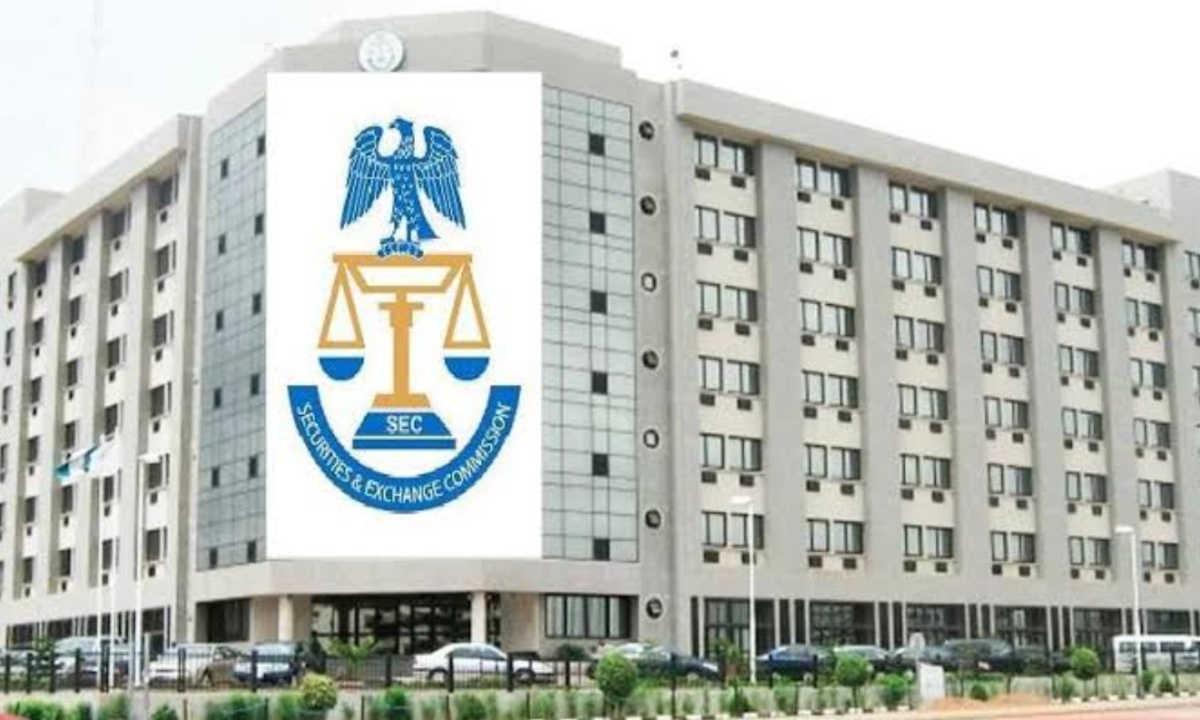
The Securities and Exchange Commission (SEC) has tightened rules governing Nigerian capital market firms’ dealings with high-risk countries, ordering operators to cut financial ties with North Korea and reject transactions involving Iranian financial institutions.
The directive is part of broader measures to strengthen Nigeria’s defences against money laundering, terrorism financing and proliferation financing.
Contained in a circular issued to all capital market regulated entities on August 14 and dated June 19, 2026, the directive takes immediate effect.
The SEC said the measures followed updated assessments issued by the Financial Action Task Force (FATF) at its February 2026 plenary session on jurisdictions with significant financial crime risks.
The Commission said the directive was issued under the Investments and Securities Act, 2025, and its Anti-Money Laundering and Counter-Terrorism Financing Rules and Regulations.
Under the new requirements, capital market firms must terminate correspondent banking relationships with financial institutions incorporated in, owned or controlled by individuals or entities in North Korea, formally known as the Democratic People’s Republic of Korea.
They must also ensure that no subsidiaries, branches or representative offices of North Korean financial institutions are established or maintained within their operations.
The SEC further directed firms to restrict or, where necessary, refuse business relationships and transactions involving North Korean nationals, entities, government bodies or persons acting on their behalf.
For Iran, operators were ordered to refuse to process or facilitate transactions involving Iranian financial institutions.
The firms were also directed not to establish or maintain subsidiaries, branches or representative offices of Iranian financial institutions in Nigeria.
The regulator further instructed capital market operators to refrain from establishing or operating branches, subsidiaries or representative offices in Iran where weaknesses in the country’s anti-money laundering, counter-terrorism financing and counter-proliferation financing framework could compromise their compliance obligations.
The SEC adopted a less restrictive approach to Myanmar, directing operators to apply enhanced due diligence to transactions and business relationships involving the country.
Beyond the three countries, the Commission directed capital market firms to strengthen monitoring of transactions involving 20 jurisdictions currently under the FATF’s increased-monitoring regime.
The jurisdictions are Algeria, Angola, Bolivia, the British Virgin Islands, Bulgaria, Cameroon, Côte d’Ivoire, the Democratic Republic of the Congo, Haiti, Kenya, Lao PDR, Lebanon, Monaco, Namibia, Nepal, South Sudan, Syria, Venezuela, Vietnam and Yemen.
The FATF’s increased-monitoring category covers jurisdictions that have committed to addressing strategic weaknesses in their anti-money laundering and counter-terrorism financing systems but remain under enhanced international scrutiny.
The SEC directed regulated entities to promptly report unusual or suspicious transactions to the Nigerian Financial Intelligence Unit (NFIU).
It warned that failure to comply with the directive would amount to a violation of the Investments and Securities Act, 2025, and the SEC’s AML/CFT rules.
Non-compliant firms could face fines, suspension of operations or revocation of registration.
The latest action comes as Nigerian authorities intensify efforts to strengthen the country’s sanctions and financial intelligence framework.
The SEC had recently directed capital market operators to subscribe to the Nigeria Sanctions (NigSac) Alerts system following fresh terrorism-financing designations by Nigerian authorities.
Operators were instructed to identify and freeze assets linked to designated individuals and entities, report suspicious transactions to the NFIU and prohibit dealings with sanctioned persons.
The latest directive expands those controls by requiring capital market firms to scrutinise international business relationships more closely and prevent exposure to jurisdictions that could create money laundering, terrorism financing or other financial crime risks.