When we talk about supporting women, particularly women in business and entrepreneurship, the first thing that often comes to mind is money—loans, grants, credit facilities and other forms of financial assistance.
Finance is undoubtedly important because a woman may have a brilliant business idea, the passion to pursue it and a ready market, but without adequate capital, it may be difficult for her to start or expand.
However, I want us to consider an important question today:
Is money alone enough to make a woman succeed?
My answer is no. Giving a woman money without providing the right knowledge, mentorship, networks, market opportunities and institutional support can be compared to giving someone a vehicle without teaching her how to drive or showing her the road to her destination.
Therefore, our discussion should move from simply asking,
“How can women access finance?” to asking a broader question: “What complete support system does a woman need to start, grow, compete and remain sustainable?”
That is what I mean by accessing the right support beyond financing.
Why Financing Alone Is Not Enough – There is sometimes an assumption that once a woman receives a loan or grant, her major business problem has been solved.
But money does not automatically create business success. A woman can receive ₦500,000, ₦1 million or even ₦5 million and still struggle if she does not understand basic financial management, customer behaviour, pricing, marketing, record keeping or business strategy.
In fact, access to finance without adequate business knowledge can sometimes create additional problems. A poorly managed loan becomes debt rather than an instrument for growth.
For example, imagine two women who receive the same amount of money to expand their businesses. The first woman simply injects the entire money into purchasing more products.
The second woman first studies her customers, identifies her fastest-moving products, keeps proper records, separates personal money from business money, uses digital marketing and develops relationships with suppliers. After one year, their results may be completely different, even though they received exactly the same amount of finance.
The difference is not necessarily the money. The difference is the support system surrounding the money. So, while we must continue advocating for greater financial inclusion for women, we must equally advocate for what I call complete entrepreneurial support.
Business Knowledge and Capacity Building – The first major support women need beyond finance is knowledge.
Entrepreneurship today requires much more than knowing how to produce a good product. Or how to render effective services A woman running a business should understand:
Who is my customer?
What problem am I solving?
What does it actually cost me to produce my product?
What does it actually cost me to render my services?
(for a service venture) How should I price it?
How much profit am I making?
How can I attract and retain customers?
How do I manage cash flow?
How do I expand without destroying the business?
These questions are extremely important.
Women therefore need access to practical training in financial literacy, bookkeeping, marketing, customer service, business planning, inventory management, leadership, strategic decision-making and Ai application for optimization in business ventures.
Training should also be practical. We should not simply gather women in a hall, give long speeches, distribute certificates and assume empowerment has taken place.
Real empowerment should produce competence.
After the training, can she prepare a simple business budget?
Can she calculate her profit?
Can she price correctly?
Can she keep business records?
Can she identify opportunities?
That is the kind of capacity building women need. Thanks to the advent of so many artificial intelligent (AI) tools like ChatGPT just one out of the numerous AI tools that can simplify these training for the women in business, especially small one man business that may not be viable to hire professionals for these tasks.
Mentorship and Role Models – Another important support is mentorship. Sometimes, what a woman needs is not another loan but someone who has travelled the road before her and can say: “I made this mistake. You don’t have to make it.” A good mentor can help a woman avoid costly mistakes, identify opportunities, build confidence and make better decisions.
This is particularly important for young women entering entrepreneurship or professional careers.
We need more successful women—and supportive men as well—who are willing to deliberately mentor emerging female entrepreneurs and professionals.
Mentorship should not simply be motivational.
A mentor should be able to ask difficult but necessary questions: What are your numbers?
Who are your customers?
What is your growth strategy?
Why is this product not selling? What are you doing differently from your competitors?
Sometimes one piece of advice from an experienced person can save an entrepreneur years of trial and error.
We must therefore build stronger mentorship structures around women. This is one of the area Diamond Foundation will want to help willing women and other youths to ensure their success in business.
Networks and Strategic Relationships – There is a saying that your network can influence your opportunities.
Many women work extremely hard but operate within very limited networks. Yet business opportunities often move through relationships. Someone knows about a contract. Someone knows a reliable supplier. Someone knows an investor. Someone knows an organisation looking for exactly the service you provide.
Someone can introduce you to your next major customer. Women therefore need to deliberately participate in professional associations, business communities, cooperative groups, industry events, conferences and entrepreneurship networks. And networking should not simply mean exchanging phone numbers.
Effective networking means building genuine relationships based on value, trust and mutual support. Women should ask themselves: Who knows what I do?
Who can recommend my business? Who can connect me to opportunities?
And equally important—who am I helping? Networking is not merely about what we can collect from people. It is about creating relationships where value flows in both directions.
Market Access – Another critical issue is market access.
Sometimes women do not actually need another grant. What they desperately need are customers. Imagine a woman who produces excellent food products, clothing, cosmetics, crafts or agricultural products.
Giving her another ₦500,000 may help temporarily. But imagine connecting her to supermarkets, hotels, schools, government procurement opportunities, online marketplaces or corporate organisations that can consistently purchase her products.
That connection may transform her business more permanently than another small grant. So our empowerment programmes must begin to connect women to markets.
Government agencies, private companies and large organisations can intentionally create opportunities for qualified women-owned businesses within their supply chains.
Women themselves must also understand standards, packaging, branding, certification, quality control and procurement requirements.
The goal should not merely be to help women produce. We must help them sell.
Because a business without customers cannot survive, irrespective of how much money has been invested in it.
Technology and Digital Support – Today, technology has changed the meaning of market access. A woman operating from a small location in Abuja, Lagos, Kano, Enugu or a rural community can potentially reach customers far beyond her immediate environment.
But she must know how. Women need greater access to digital literacy, social media marketing, ecommerce, digital payments, productivity tools, data management and appropriate use of artificial intelligence.
A smartphone should not be viewed only as a communication or entertainment device. For an entrepreneur, it can become an office, marketing platform, customerservice centre, classroom and marketplace.
A woman can photograph her products, advertise them, communicate with customers, receive payments, keep certain business records and learn new skills—all through digital tools. Closing the digital skills gap is therefore an important part of women’s economic empowerment.
Emotional, Family and Social Support – There is another area we sometimes ignore: emotional and social support. Many women combine multiple responsibilities.
A woman may simultaneously be an entrepreneur, employee, mother, wife, caregiver and community member.
Therefore, when discussing women’s productivity, we cannot completely ignore the environment surrounding her.
Supportive families and communities matter. Women should not constantly be made to feel guilty for pursuing legitimate professional or entrepreneurial ambitions.
This does not mean abandoning family responsibilities. Rather, it means encouraging partnership, communication, shared responsibility and healthy support systems.
Women also need confidence-building environments where failure is treated as an opportunity to learn rather than permanent evidence that they cannot succeed.
A woman who tries a business and fails should be encouraged to evaluate: What went wrong? What did I learn? What should I change?
What opportunity can I pursue next?
Resilience is easier when people have healthy support systems around them.
Mental Health and Mental Stability – Another very important area of support that we must not overlook is the mental health and mental stability of women.
When we talk about empowering women, we often concentrate on what is happening around the woman—her finances, business, career, family and opportunities—but we must also pay attention to what is happening within the woman.
A woman may have access to funding, training and business opportunities, but if she is constantly overwhelmed by stress, anxiety, emotional pressure, family challenges, workplace demands or the burden of trying to meet everyone’s expectations, her ability to make sound decisions and maximise opportunities may be affected.
This is why mental well-being should be considered part of women’s empowerment.
A mentally and emotionally stable woman is better positioned to think clearly, make informed decisions, manage pressure, build healthy relationships, recover from setbacks and pursue her goals with confidence.
And we must remove the stigma surrounding women asking for help. Seeking professional counselling, talking to a trusted person, taking appropriate rest, setting healthy boundaries or admitting, “I need support,” should not automatically be interpreted as weakness.
Sometimes women are expected to be strong for everybody—their children, spouses, parents, colleagues, employees and communities—while nobody asks, “Who is supporting the woman herself?”
That is a question we need to begin asking. Mental stability also involves knowing when to slow down, when to delegate, when to say no and when to seek appropriate professional support.
A woman does not have to carry every responsibility alone to prove that she is strong. Families, workplaces, organisations and communities should therefore create environments where women can speak about emotional and psychological pressures without fear of ridicule or discrimination.
For women in business particularly, entrepreneurship comes with uncertainty. There may be periods of low sales, financial pressure, rejection, business failure or difficult customers.
Therefore, women need not only financial resilience but also mental and emotional resilience. And I would like to emphasise this: A successful woman is not simply a woman who is financially prosperous.
A truly empowered woman should also have the opportunity to be mentally healthy, emotionally supported and able to live a balanced and meaningful life.
So when we say women need the right support beyond financing, that support must include mental-health awareness, counselling where necessary, healthy relationships, supportive communities, rest, emotional intelligence and safe spaces where women can seek help.
Because ultimately, we are not merely building successful businesses; we are building healthy women who can build healthy businesses, healthy families and healthier communities.
Institutional and Government Support – Government and institutions also have an important role.
Supporting women should go beyond periodically announcing funding programmes.
Women need accessible business registration systems, relevant information, skills-development programmes, infrastructure, security, transparent procurement opportunities and policies that make it easier for legitimate businesses to operate. Another challenge is information accessibility.
Sometimes opportunities exist, but the women who need them do not know about them. Information about grants, training, procurement, certification, export opportunities and government programmes must reach women at the grassroots.
We should therefore strengthen partnerships among government institutions, educational institutions, financial organisations, NGOs, private businesses and community organisations.
No single institution can address all the barriers women face.
What Women Must Also Do for Themselves – While institutions have responsibilities, women themselves must also take responsibility for their development.
We must avoid creating the impression that empowerment means waiting for someone to rescue us. Women should continuously develop themselves. Learn. Ask questions. Seek mentors. Build networks. Embrace technology.
Keep proper records. Understand your industry. Look for opportunities. Collaborate with others.
And remain willing to start small and grow strategically. Women should also support other women. If you have knowledge, share it.
If you know about an opportunity, communicate it. If you can mentor another woman, do so. If another woman provides a good product or service, recommend her.
Our progress becomes stronger when empowerment develops into an ecosystem rather than an individual struggle.
Conclusion – As I conclude, I want listeners to remember this: Finance is important, but finance is only one part of empowerment. A woman needs capital, but she also needs capacity. She needs money, but she also needs mentorship. She needs funding, but she also needs information.
She needs products, but she also needs markets. She needs ambition, but she also needs mental support, networks and opportunities. And she needs technology, supportive institutions and an enabling environment.
Therefore, if we genuinely want to empower women, we must stop measuring empowerment simply by how many women received loans or grants.
We should also ask: How many businesses survived? How many women gained new customers? How many acquired useful skills?
How many entered new markets?
How many became employers of labour?
How many moved from beneficiaries to successful business owners and mentors of other women?
That is sustainable empowerment. My message to every woman listening today is simple: Do not only look for money; look for knowledge. Do not only look for funding; look for relationships.
Do not only look for opportunities; prepare yourself to maximise them. Because when the right financing meets the right knowledge, right network, right mentorship, right market and right support system, a woman is not merely empowered to survive—she is positioned to grow, lead, create jobs and transform her community and the nation at large. It is pertinent to note that all the above supports are part of what diamond foundation hope to give not only the women but willing youths as the foundation look forward to getting the needed sponsors to achieve the above as well as other impactful activities it hope to engage in for the benefit of the entire nation. Thank you.
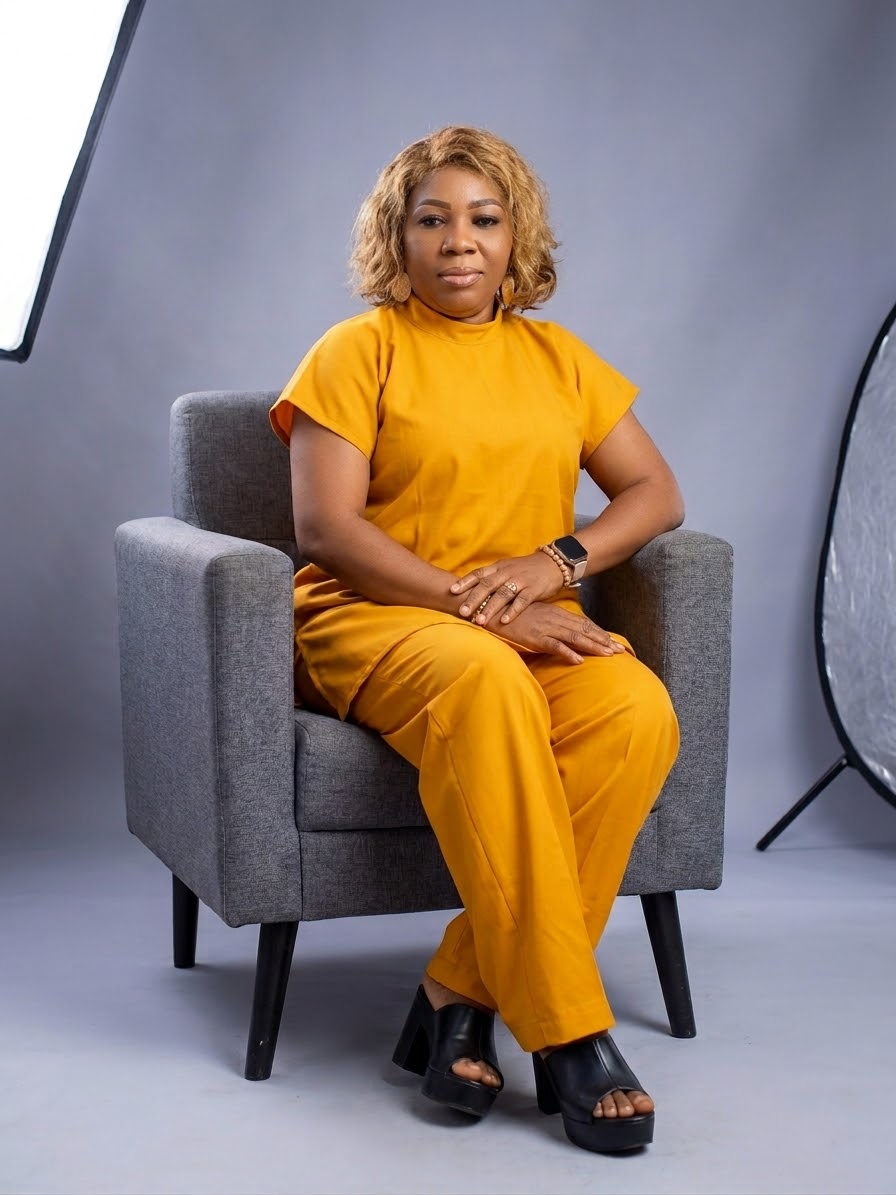
Dr. Rose M. Emmanuel, Founder, Diamond Foundation & Business Coach