
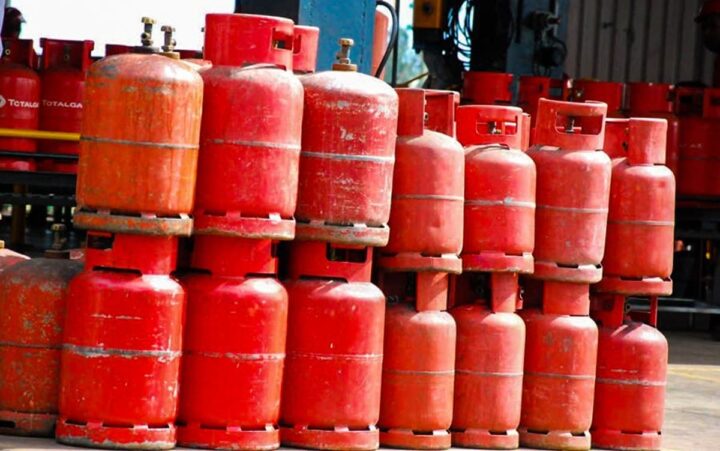
For millions of Nigerians, the cost of cooking gas is more than a figure displayed at a filling station. It is a recurring household expense that influences how families prepare meals, how restaurants manage their operations and how small businesses cope with rising costs.
Against this background, the federal government’s decision to remove Value Added Tax (VAT) and import duties on Liquefied Petroleum Gas (LPG), Compressed Natural Gas (CNG) and related equipment has become an important policy intervention aimed at reducing costs across the gas value chain and improving access to cleaner energy.
Although the exemptions do not eliminate the many factors influencing gas prices, they are intended to ease the financial burden on operators, encourage investment and create room for more affordable gas supplies to households and businesses.
The push for the exemptions gained momentum in 2023 when the leadership of the Nigeria Liquefied and Compressed Gases Association (NLCGA) paid an advocacy visit to Mrs Olu Verheijen, Special Adviser on Energy to President Bola Ahmed Tinubu.
During the engagement, the association presented some of the major challenges confronting the gas industry, particularly the impact of VAT and import duties on gas affordability and the cost of equipment required for distribution and utilisation.
For an industry seeking to expand domestic consumption, these additional charges increased operating costs. Import duties on cylinders, storage equipment, distribution infrastructure and other essential components placed further financial pressure on operators, with potential implications for the prices ultimately paid by consumers.
Following the meeting, the Office of the Special Adviser requested a detailed submission outlining the specific areas requiring government intervention.
Beyond tax relief, the NLCGA also emphasised the need for stronger coordination among government institutions responsible for implementing policies affecting the energy sector. It advocated a central coordinating mechanism to drive industry-related issues across Ministries, Departments and Agencies (MDAs), while ensuring effective communication with the Presidency.
This was followed by a series of engagements involving the Office of the Special Adviser and the Federal Ministry of Finance, culminating in policy decisions that addressed some of the industry’s longstanding concerns.
On November 28, 2023, a government directive provided for zero import duty and VAT on LPG, with immediate effect. The relief also covered essential equipment, including gas cylinders, cascades, leak detectors, pipes, valves, dispensers, generators and LPG trucks.
A subsequent directive in December extended similar treatment to CNG equipment, strengthening the policy framework for expanding domestic gas utilisation. The intervention also addressed concerns about retroactive taxation, providing further relief to industry operators.
The implications of the exemptions extend beyond the technical provisions of government fiscal policy, particularly for households and businesses facing rising energy costs.
For households, one of the most immediate potential benefits is the prospect of lower cooking gas costs. LPG prices are influenced by several factors, including foreign exchange fluctuations, international market conditions, domestic supply, transportation and distribution costs. VAT and import duties are additional cost components that can affect the overall price structure.
By removing these charges on qualifying products and equipment, the federal government has eliminated a layer of taxation that could otherwise add to the cost of bringing gas to market. This creates room for lower operating costs and could help limit additional price pressures on consumers.
For families managing monthly expenses, restaurants relying on gas for daily operations and small food businesses seeking to remain profitable, even modest improvements in affordability could make a difference.
The policy is also relevant to households considering a shift from traditional cooking fuels such as firewood and charcoal to LPG. Affordability remains a major consideration in the adoption of cleaner cooking alternatives. Measures that reduce the cost of gas and associated equipment could therefore encourage wider access, particularly when supported by reliable supplies and efficient distribution networks.
Beyond household consumption, the exemptions have implications for businesses operating across Nigeria’s gas industry. Developing a functional gas market requires substantial investment in infrastructure, storage, transportation, distribution and safety equipment.
For operators importing cylinders, valves, dispensers, trucks and other components, tax-related costs can influence investment decisions and the pace of business expansion.
Removing import duties and VAT on qualifying equipment reduces some of these financial pressures and could improve the investment environment. It may also support the expansion of distribution networks, particularly in communities where access to LPG remains limited.
However, tax relief represents only one part of the solution. Sustainable growth in the gas industry will depend on improvements in domestic production, supply reliability, infrastructure development and the capacity of businesses to deliver products efficiently to end users.
The long-term value of the exemptions will therefore depend not only on the reduction in import costs but also on how effectively the savings translate into investment, improved distribution and wider consumer access.
The policy intervention also has implications for Nigeria’s transportation sector, where CNG is increasingly being promoted as an alternative automotive fuel.
As businesses and vehicle owners seek ways to manage transportation and operating costs, the affordability of converting vehicles to CNG has become an important consideration.
The VAT exemptions covering CNG conversion kits, spare parts and installation services are intended to reduce the financial barriers associated with switching from conventional fuels. Fully CNG-powered vehicles also benefit from import duty and VAT exemptions, providing additional incentives for the adoption of gas-powered transportation.
These measures complement broader government initiatives to expand CNG infrastructure and encourage its use for commercial and private mobility.
Major companies, including Dangote Cement, have announced commitments to converting substantial portions of their fleets to CNG-powered vehicles, reflecting growing interest in the technology among large-scale operators.
With more than 120,000 vehicle conversions reported nationwide, the transition is gaining momentum. However, the extent to which the tax exemptions will accelerate adoption will depend on the availability of conversion facilities, reliable CNG supplies and supporting infrastructure.
For the transportation sector, the benefits of the exemptions are therefore closely linked to the development of an ecosystem that makes CNG adoption practical, affordable and sustainable.
While the exemptions represent an important policy milestone, the NLCGA is continuing its engagement with the Federal Government through the Ministry of Petroleum Resources (Gas) and the Office of the Special Adviser on Energy to identify practical solutions for the industry’s next phase of development.
As part of these efforts, the association is developing a comprehensive study examining barriers across the gas value chain, from production and processing to transportation, distribution and last-mile consumption.
The study is expected to identify areas requiring government intervention and propose practical approaches to improving supply efficiency, reducing costs and strengthening market development.
At the centre of these efforts is the industry’s ambition to increase annual LPG consumption to five million metric tonnes by 2030, while advancing the adoption of gas as a preferred fuel for transportation.
Achieving these objectives will require more than fiscal incentives. It will depend on consistent policies, infrastructure investment, collaboration between government and private-sector stakeholders, and sustained efforts to make gas available and affordable to consumers.
The removal of VAT and import duties has provided a policy framework for reducing some of the costs confronting the industry. However, its broader impact will ultimately be determined by how effectively the exemptions are implemented and whether the benefits translate into lower costs, increased investment and wider access.
What began as an industry advocacy engagement in 2023 has contributed to policy measures with implications for households, businesses, investors and the wider energy sector. As Nigeria seeks to expand domestic gas utilisation, the challenge is to ensure that the tax relief translates into tangible benefits across the value chain, particularly for consumers.