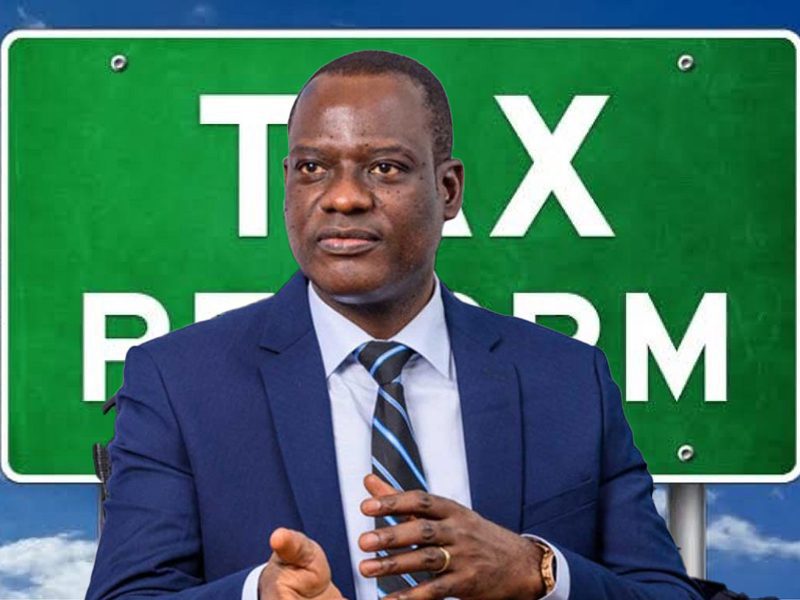
Traders and business owners across Abuja are increasingly opting for cash payments, raising questions about how Nigeria’s new tax laws are reshaping market practices and challenging the country’s financial inclusion agenda, a recent study by NATIONAL ECONOMY reveals. The law’s provisions on electronic transactions remain confusing for many, leaving businesses and customers navigating uncertainty and potential extra costs.
At Mararaba’s Building Materials market, Mr. Fredrick Ozom, said cash payments help him avoid unintended tax charges. “Since the government will not relent in collecting taxes, we have learnt to do our business with wisdom,” he explained. Ozom directs customers to nearby Point of Sale (PoS) operators to withdraw cash and splits transaction fees with larger clients. “Until I fully understand the tax provisions, cash is the safest way to keep my business running,” he added.
Mr. Joseph Omakoru , a trader at Karu market, described the law as complex. “Cash is straightforward, no complications, no need to involve banks or digital records,” he said. Traders worry that electronic transfers could be taxed unfairly, prompting a shift back to physical money.
Buyers are also feeling the impact. Mrs. Angela Ikeogu, recounted paying additional fees on a transfer of over N830,000 after the seller warned that both the bank and government could levy taxes. “I ended up paying an extra N20,000 after much dragging back and forth. This is frustrating and discouraging,” she said.
Other market voices reveal the widespread concern:
Mr. Clement Ubong , a cosmetics dealer at Garki market, said most clients now insist on cash. “Electronic transfers are risky; I don’t want the government or my bank to surprise me with extra charges,” he said.
Mrs. Jovita Ekarika , a grocery store owner in Jabi, keeps minimal funds in her bank account. “Cash is easier to track, and I feel more in control of my finances,” she explained.
Mr. Moses Isah, plastics dealer, added, “Customers are confused too; many ask for cash because they don’t want extra deductions. It’s a shared anxiety.”
Mrs. Bilkisu Adamu, a boutique owner in Gwarimpa said, “I encourage my regular clients to use cash because it avoids complications with PoS charges.”
Mr. Chijioke Anih, tyre dealer said, “The law is complex and poorly communicated. If traders aren’t informed, everyone ends up frustrated. Cash is the only way to stay safe for now.”
Business owners are now calling for urgent public awareness campaigns. Mrs. Gloria Oforji, urged agencies such as the National Orientation Agency (NOA) and the tax committee to educate citizens and translate the law into local languages for wider comprehension.
The trend highlights a growing tension between the Central Bank of Nigeria’s financial inclusion policies and traders’ cautious approach amid regulatory uncertainty. Analysts warn that without clearer guidance, more businesses may continue bypassing electronic transactions, potentially undermining formalisation efforts and digital banking adoption in Nigeria.

Tuesday, March 31, 2026
Cash Or Compliance? How New Tax Laws Are Shaping Markets