
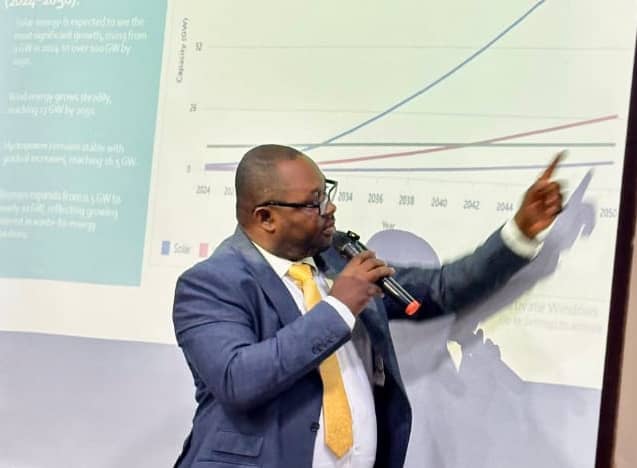
Eur. Ing. Dr. Chinedu Ogwus, Regional Director, Africa (Robotics and Autonomous Systems – RAS), Society of Petroleum Engineers International (SPEi), has called for urgent, science-driven reforms to Nigeria’s energy sector, warning that decades of mismanagement threaten economic growth and industrial competitiveness.
He delivered a groundbreaking paper and a thought-provoking presentation at the inauguration of the Pioneer Fellowship and Honours Cohort by the Global Chartered Institute of Energy Management (GCIEM), Canada.
The event, held at the Carlton Swiss Hotel, Utako – Abuja, gathered policymakers, regulators, energy experts, and technical innovators. Speaking under the theme “Challenges of the Energy Sector in Nigeria’s Economy,”
Dr. Ogwus highlighted the paradox of a nation rich in oil, gas, and renewable resources, yet unable to deliver reliable electricity to over 70 million citizens. Industries continue to rely on costly generators, inflating production costs and stalling competitiveness.
Despite Nigeria’s estimated 209 trillion cubic feet of natural gas, only a fraction of its 13,000 MW installed capacity reliably reaches consumers. Dr. Ogwus described this shortfall as “a structural embarrassment that undermines national competitiveness,” noting that energy inefficiencies, vandalism, and weak infrastructure cost the country over $28 billion annually.
He identified systemic governance lapses, declining refinery performance, pipeline vandalism, and inconsistent regulation as root causes. “These are not simply technical failures—they are governance failures,” he said, stressing that policy gaps and limited accountability have discouraged investors and hindered sustainable energy development.
Dr. Ogwus outlined a clear roadmap for recovery. He called for diversification of the energy mix, boosting solar, wind, hydro, and other renewable sources, alongside modernization of the national grid. Leveraging Nigeria’s untapped solar potential and adopting smart-grid technologies, he said, could reduce technical losses, expand access, and strengthen reliability, especially in rural areas.
He also emphasized that domestic gas must serve as the backbone of Nigeria’s energy revolution. Using the Decade of Gas initiative, Dr. Ogwus advocated for boosting electricity generation through gas, reducing carbon emissions, and fostering industrial growth. He added that drones, satellite monitoring, and community engagement are crucial to combat pipeline vandalism and oil theft.
Financing the energy transition, he said, requires mobilizing green finance from global climate funds, carbon markets, and green bonds, targeting at least $3 billion annually for renewable and clean energy projects. These investments, he explained, would address energy deficits, create jobs, diversify industry, and promote environmental sustainability.
Closing his address, Dr. Ogwus urged government, private sector, and civil society to collaborate on building a resilient, secure, and inclusive energy system. “The decisions we make today will define Nigeria’s energy future,” he said. “With disciplined leadership, transparency, and innovation, Nigeria can not only power itself but also position itself to power Africa.”