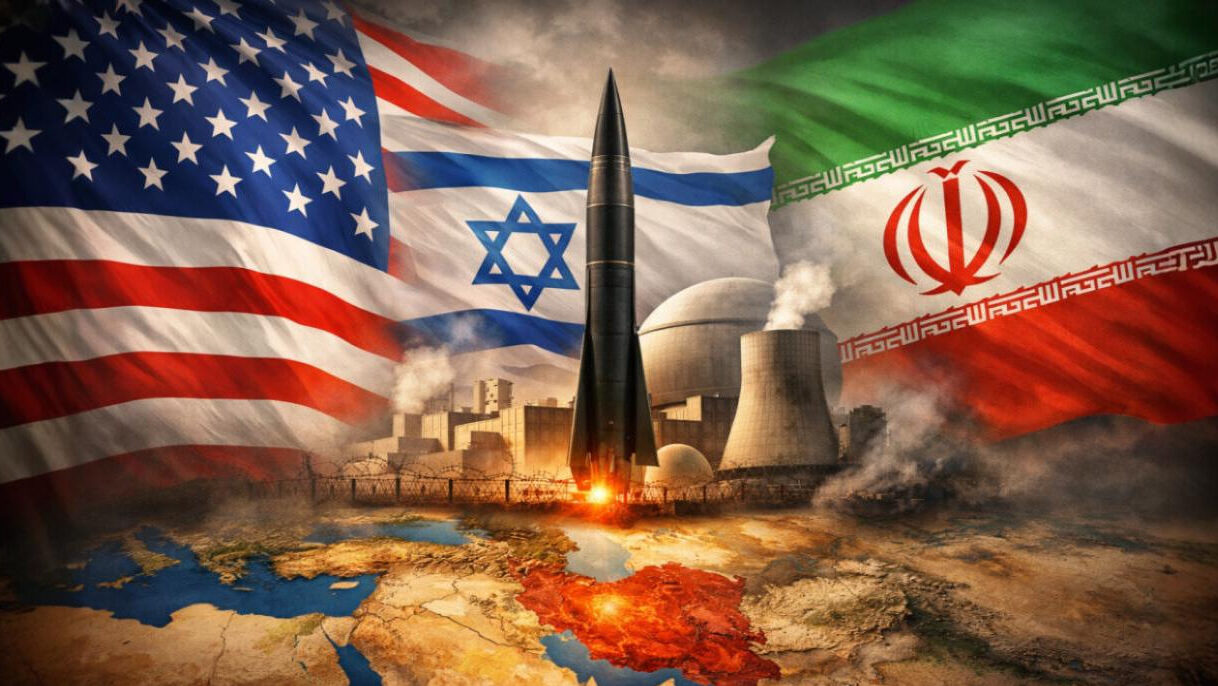
Dr Muda Yusuf, Chief Executive Officer, Centre for the Promotion of Private Enterprise (CPPE), has outlined the implications of the Iran- United States -Israeli conflict on the Nigerian economy.
Yusuf, via a statement on Sunday in Lagos, noted that its effects would be both positive and adverse, depending on the duration of the conflict and the quality of domestic policy responses.
He noted that the escalating conflict involving Iran, the United States, and Israel had injected a new wave of geopolitical risk into the global economy.
According to him, energy markets are the first transmission channel, with strategic importance of the Strait of Hormuz, through which roughly 20 per cent of global crude oil supply is transported daily.
He asserted that any disruption to this corridor would have immediate implications for global oil prices, shipping costs, insurance premiums, and supply chains.
“There is also the output disruption effect, as Middle East countries are major oil producers.
“For Nigeria, an oil-dependent economy where crude accounts for over 85 per cent of export earnings and about half of government revenue, the implications are significant,” Yusuf said.
The CPPE boss noted that geopolitical tensions in the Middle East historically triggered sharp increases in crude oil prices due to fears of supply disruptions.
He added that speculative risks around the Strait of Hormuz typically generated price volatility of $5–$15 per barrel within short periods.
Yusuf said for Nigeria, every increase in crude oil price translates into additional export earnings and fiscal revenues.
According to him, the immediate benefits include higher crude export receipts, improved foreign exchange inflows, strengthening of external reserves and increased FAAC allocations to all tiers of government.
“However, revenue gains are critically dependent on production levels.
“Nigeria’s current crude output has fluctuated around 1.4 million barrel to 1.6 million barrels per day, below installed capacity and vulnerable to oil theft, pipeline vandalism, and underinvestment in upstream infrastructure.
“Without a sustained improvement in production efficiency and security, Nigeria may not fully optimise any price windfall,” he said.
Yusuf also noted a medium-term risk, particularly if the conflict escalates and dampens global growth, oil demand could weaken, leading to price corrections.
He said the development could additionally reduce short-term pressure on the naira and reinforce investor confidence.
He, however, stated that given Nigeria’s relatively shallow capital market and sensitivity to foreign portfolio investment, volatility in global financial conditions could offset part of the foreign exchange gains from higher oil prices.
“The net exchange rate impact will therefore depend on the balance between stronger oil inflows and potential capital reversals,” he said.
Yusuf stressed the most immediate domestic risk from the conflict to be inflation transmission.
He said because Nigeria operated a deregulated downstream petroleum regime, higher international crude prices could feed directly into higher petrol, diesel and aviation fuel costs.
“The likely channels include rising pump prices, increased transportation/logistics costs, higher food distribution expenses and escalating manufacturing and logistics costs.
“Thus, while government revenues may rise, household welfare could deteriorate creating a divergence between fiscal gains and social outcomes,” he said.
Yusuf said the current situation presented an opportunity for disciplined fiscal consolidation.
He said priority actions should include saving part of any oil windfall in stabilisation mechanisms, reducing
fiscal deficits, moderating public debt accumulation and prioritising capital expenditure over recurrent spending.
He added that strategic imperatives should include strengthened oil production capacity with intensified anti-theft operations.
The CPPE boss advocated the importance of fiscal buffers by channeling excess revenues into stabilisation and sovereign savings frameworks.
He also called from deepened domestic refining to reduce vulnerability to imported refined products and enhanced transparency and liquidity in the foreign exchange market to mitigate volatility.
“Nigeria must also cushion vulnerable households against energy-driven inflation shocks, expand non-oil exports, manufacturing, agro-processing, ICT, and services to reduce external vulnerability.
“The Iran–U.S.–Israel conflict represents a classic double-edged shock for Nigeria.
“The ultimate impact will depend less on external events and more on domestic policy discipline,” he said.(NAN)

Monday, March 30, 2026
Expert Outlines Implications Of Iran-U.S.-Israel Conflict On Nigerian Economy