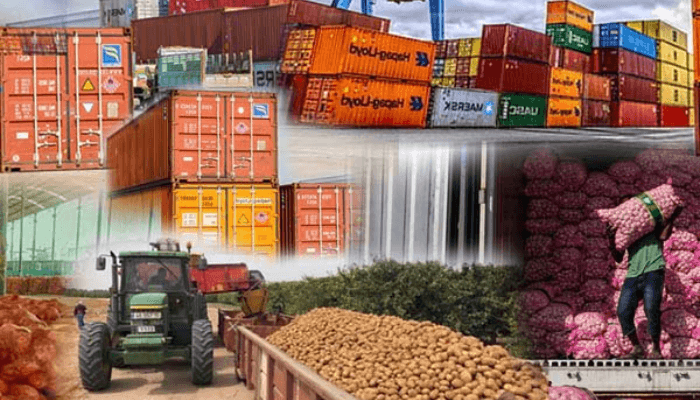
Nigeria’s ambition to build a diversified, agriculture-driven export economy is recording measurable gains in value terms, but the structure of the sector continues to expose deep competitiveness gaps that limit its performance in global markets.
Although non-oil export earnings climbed to about N12.36 trillion in 2025, up from N9.09 trillion in 2024, according to data from the National Bureau of Statistics (NBS) and the Nigerian Export Promotion Council (NEPC), stakeholders say the growth masks underlying weaknesses in productivity, value addition, certification compliance and logistics efficiency.
Agricultural commodities such as cocoa, cashew, sesame seeds and urea remain dominant contributors to the non-oil export basket. However, experts argue that Nigeria is still operating largely at the lower end of the global agro-value chain, exporting raw or semi-processed commodities while losing significant foreign exchange opportunities to countries with more integrated agro-industrial systems.
Across global markets, countries such as Côte d’Ivoire, Vietnam, India and Thailand have strengthened their agro-export sectors through coordinated investments in processing capacity, farm mechanisation, rural infrastructure and export financing systems.
In contrast, Nigeria’s agricultural export ecosystem remains fragmented, with production dominated by smallholder farmers, weak aggregation systems, and inconsistent compliance with international standards.
Industry stakeholders say this structure continues to limit Nigeria’s ability to meet large-volume contracts, maintain consistent quality thresholds and compete in high-value export segments.
Vice president of the All Farmers Association of Nigeria (AFAN), Daniel Okafor, said Nigeria’s export limitations begin at the farm level, where most producers lack exposure to global standards required for premium international markets.
He identified weak farmer education, absence of traceability systems and limited compliance with international certification frameworks as major constraints.
Okafor said regulatory gaps have left many farmers outside structured training and compliance systems, particularly in the use of agrochemicals, pesticides and export-grade cultivation practices.
According to him, Global Good Agricultural Practices certification, commonly known as Global (GAP), remains out of reach for most smallholder farmers due to cost and inadequate institutional support.
“Lack of training, traceability and global gap certification are major problems. Farmers are not properly carried along by the regulatory organisations. The use of agricultural inputs like agrochemicals, herbicides and pesticides must comply with global standards,” Okafor said.
He stressed that improving Nigeria’s export competitiveness would require coordinated investment in farmer education, certification support systems and traceability infrastructure that can link production directly to international buyers.
“Farmers awareness, traceability, global gap certification and best agricultural development programmes are very important. If government and stakeholders do the needful, everything will be okay,” he added.
Beyond compliance issues, analysts say Nigeria’s agro-export base is constrained by the dominance of subsistence farming, which prevents aggregation at the scale required for international competitiveness.
National president of the National Cashew Association of Nigeria (NCAN), Ademola Adesokan, said the structure of production remains one of the biggest barriers to export expansion.
He said most Nigerian farmers operate on small plots with limited mechanisation, making it difficult to achieve consistent output volumes or quality standards demanded by global buyers.
According to him, this fragmentation also raises transaction costs and weakens Nigeria’s bargaining position in international commodity markets.
Adesokan further identified access to affordable financing as a structural disadvantage for Nigerian exporters.
He noted that while agro-exporters in competing economies access credit at single-digit interest rates, Nigerian operators often borrow at double-digit rates, significantly increasing production and export costs.
According to him, this financing disparity erodes margins long before commodities reach international markets.
“That financing differential alone erodes our export margins before the commodity leaves the farm,” Adesokan said.
He added that the cost of credit affects every stage of the value chain, from farm inputs to aggregation and export logistics, ultimately weakening Nigeria’s global pricing competitiveness.
Stakeholders also pointed to post-harvest losses, inadequate storage systems and inefficiencies at the nation’s ports as persistent structural bottlenecks.
Poor drying facilities, limited cold-chain infrastructure and inconsistent warehousing systems contribute to quality deterioration, particularly for export-sensitive commodities such as cocoa and sesame.
Adesokan said these weaknesses often result in Nigerian produce arriving at international destinations below premium-grade standards, reducing its market value and acceptability.
“Inadequate drying infrastructure, inappropriate storage methods and prolonged port delays mean Nigerian produce frequently arrives below the quality thresholds premium buyers demand,” he said.
Logistics inefficiencies, including congestion at export terminals and delays in customs processing, further compound the challenges, increasing delivery timelines and reducing Nigeria’s reliability in contract-based export markets.
Despite Nigeria’s strong production capacity in several agricultural commodities, the country continues to export largely in raw form, missing out on higher-value earnings associated with processing and industrial transformation.
For instance, cocoa and cashew, two of Nigeria’s leading export commodities are still predominantly exported as raw beans and nuts, while countries with advanced processing industries capture significantly higher margins through chocolate manufacturing and cashew processing.
Analysts argue that this structural gap continues to limit Nigeria’s foreign exchange earnings potential, even as export volumes rise.
Industry data also indicate that Nigeria continues to spend billions of dollars annually on importing wheat, sugar, dairy products and processed foods, despite its agricultural endowment.
This dual reality—rising agricultural exports alongside heavy import dependence—has raised questions about the efficiency of Nigeria’s agricultural transformation strategy and its readiness for a sustainable post-oil economy.
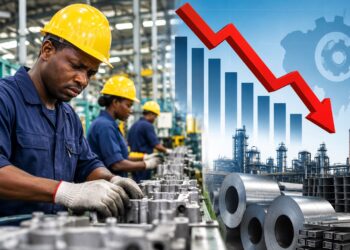
Experts warn that unless structural constraints in agriculture and manufacturing are addressed, non-oil export growth may remain insufficient to significantly alter Nigeria’s macroeconomic dependence on hydrocarbons.
Despite these challenges, stakeholders have expressed cautious optimism over the Federal Government’s Nigeria Industrial Policy 2025, which is being championed by the Minister of State for Industry, Senator John Owan Enoh.
Adesokan said the policy represents a shift toward commodity-specific industrial strategies that recognise the unique value chain requirements of key export crops.
He explained that the framework focuses on targeted interventions in commodities such as cocoa, cashew, sesame, shea and groundnut, moving away from previous broad-based agricultural policies.
According to him, the approach could help unlock value addition, improve processing capacity and enhance export competitiveness if properly implemented.
The NCAN president also disclosed that the association is engaging government on stronger regulatory reforms in the cashew sector, including improved quality enforcement systems, traceability frameworks and dedicated development financing.
He said such reforms are critical to repositioning Nigeria as a competitive supplier in premium global agro-export markets.
While Nigeria’s agro-export earnings continue to rise, stakeholders agree that the sector’s long-term competitiveness will depend less on export volume growth and more on structural reforms that address productivity, financing, certification, logistics and value addition.
Without these reforms, analysts warn, Nigeria risks remaining a raw commodity exporter in a global market increasingly driven by standards, processing capacity and supply chain efficiency.

Thursday, September 24, 2026
Why Nigeria Still Struggles To Compete In Global Agro Exports