
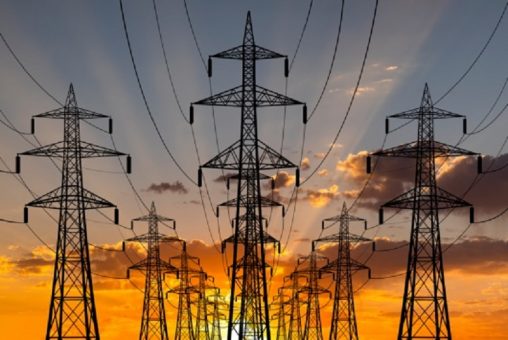
Nigeria’s electricity sector has continued to suffer underinvestment resulting to significant losses to both businesses and utility companies despite privatisation and reforms since 2013 to the present date.
Analysts cited weak market fundamentals, crumbling infrastructure, and poor governance. Key issues include deficient transmission, inefficient distribution (DisCos), low gas supply, and high financial losses, which stifle investment, resulting in persistent energy deficits, low, and a reliance on self-generation.
Though the sector is currently experiencing a critical transformation, transitioning from a centralised system to a decentralised, multi-tier market under the Electricity Act 2023.
However, despite these reforms, which empower states to manage their own electricity markets and regulate operators, the nation continues to face weak electricity supply.
According to reports as of early 2026, Nigeria’s installed power capacity exceeds 13,000 MW, yet actual available generation remains significantly lower, often hovering between 4,000 MW and 5,000 MW, which is far below the estimated demand.
It has been identified that the transmission grid has remained deficient, and the distribution network is weak, creating high technical and commercial losses. Many Distribution Companies (DisCos) lack the capital to invest in infrastructure upgrades.
The industry suffers from a lack of liquidity, low tariff collection rates, and inadequate metering of customers. High financial losses discourage investors and prevent the sector from operating as a viable business.
Also over-dependence on natural gas leads to supply volatility as gas supply constraints often prevent generation companies (GenCos) from utilising their full capacity.
Another unfortunate symptom is that regulatory bodies have faced challenges in asserting independence, with political interference impacting decision-making. Enforcement of market rules by the Nigerian Electricity Regulatory Commission (NERC) has been inconsistent, weakening consumer and investor confidence.
The privatisation exercise which aimed to improve efficiency has largely been hindered by a “non-holistic” approach, particularly the failure to effectively privatise the transmission sector.
Annual economic losses from unreliable power are estimated at N7–10 trillion ($25 billion), representing 5–7 per cent of GDP. While reforms have introduced new legal frameworks (such as the 2023 Electricity Act), structural deficiencies continue to hamper the translation of policies into reliable power supply
To industry analysts with knowledge of the sector, the situation with the country’s electricity supply industry is too weak and requires holistic reforms.
In the view of this, the coordinator, African Centre for Entrepreneurship and Information Development (ACEIDEV), NESI Consumer Advocacy, Jamila M. Umar, said Nigeria’s electricity reform journey is ongoing, but the outcomes so far reflect structural misalignment rather than outright failure.
According to Umar, the persistence of epileptic power supply, despite multiple reform efforts, highlights a fundamental issue: reform has not yet translated into coordinated performance across the entire value chain.
Though she emphasised that generation capacity exists, but it is constrained by gas supply limitations, transmission bottlenecks, and liquidity challenges within the market and as a result, available power is not always deliverable power.
“While reforms have improved certain frameworks — particularly around tariffs and market structure — these gains have not yet been matched by infrastructure readiness, financial discipline, and operational efficiency. This disconnect is what Nigerians experience as persistent darkness,” she said.
Umar, further stressed that, “At the centre of this conversation must be the citizen. Electricity is not an abstract policy issue it directly affects productivity, small businesses, healthcare delivery, and household welfare.This is where renewable energy becomes critically important.”
She said renewables especially solar is key and capable of offering Nigeria a practical pathway to decentralise power access, reduce pressure on the national grid, and improve energy resilience. In a constrained centralised system, distributed renewable solutions such as mini-grids, embedded generation, and hybrid systems can provide immediate and scalable relief.
However, she pointed out that renewables are not a wholesale replacement for grid power in the short term they are a strategic complement.
“If properly scaled, they can reduce dependence on gas volatility, expand access in underserved areas, stabilise supply for critical sectors, and strengthen overall system resilience.
“Going forward, Nigeria’s energy transition must follow a dual-track approach: strengthening the existing grid while accelerating decentralised renewable deployment. This must be supported by stronger coordination between regulators, operators, policymakers, and civil society.
“Reform must move from structure to service because for Nigerians, electricity is not about policy, it is about daily life,” she stressed.
Adetayo Adegbemle, the Executive Director and Convener of PowerUp Nigeria, a prominent electricity consumer advocacy group and research organisation focusing on policy, rights, and sector reforms, expressed different opinions on consolidating on renewable sources.
“I still have my reservations when Nigeria is talking of Energy Transition, when we are not Energy Sufficient in the first place
“I am yet to see a country that is industrialised via Renewable Energy like Solar, so, from inception, our policy focus and foundation has been wrong,” he said.
To solve the epileptic power supply in the country, Adegbemle, advocated that policy focus should remain the Grid.
“Yes, there are unserved and underserved areas where mini grid might have been sufficient for daily consumption, but there’s no way we should make that a national focus for development.
“We have wasted so much on renewable energy projects that has not yielded, because they’re not designed to yield. Even big nations like Germany, that are promoting renewable energy we’re doing it for political expediency, they were seeking to be free of Russian gas, we all can see how many industries has shut down now in Germany and how high their energy cost has risen in the last decades,” he stressed.
On his part, Nigeria’s energy lawyer, Chukwuebuka Ibeh, stated that the persistent darkness in Nigeria, despite numerous reforms, underscores a fundamental disconnect between policy intent and operational reality.
According to him, While the transition to renewable energy is often framed through the lens of climate change, its true necessity in the Nigerian context is energy access. The national grid’s frequent collapses are symptoms of decayed infrastructure and a centralised system that can no longer support the nation’s demand. Moving toward renewables isn’t just about “going green,” it is about decentralising the power supply to bypass these systemic failures.
Ibeh continued, “However, we must address the “affordability gap.” Although renewable energy offers a long-term solution, the initial capital investment remains prohibitively expensive for the average citizen. This is where the reforms have stalled. For generation companies to make a meaningful shift, they must overhaul aging assets, which requires massive capital. Furthermore, renewables are not a “set and forget” solution; they require rigorous maintenance and a robust supply chain for parts. Without this, solar and wind installations will eventually fall into the same state of disrepair as our current gas turbines.”
To bridge this, the government must move beyond rhetoric, he cautioned, adding, “The Nigerian Electricity Regulatory Commission has mandated that distribution companies source a percentage of their energy from renewables, but mandate without support is futile. The government needs to provide aggressive fiscal incentives such as waiving duties on solar components to lower costs for the end-user. Until the investment climate is fully de-risked and the private sector feels supported rather than just regulated, renewable energy will remain a luxury for the few rather than a solution for the many.”
Meanwhile, NATIONAL ECONOMY recalls that weak electricity supply in Nigeria has significantly hindered the growth of Small and Medium Enterprises (SMEs) by increasing operational costs, reducing productivity, and damaging equipment.
Over 90 per cent of Nigerian SMEs rely on expensive diesel or petrol generators as a backup, with energy deficiency estimated to reduce profitability by as much as 30 per cent.
For decades, Nigeria’s electricity system was centrally managed by the Federal Government, from the Electricity Corporation of Nigeria (ECN) to the National Electric Power Authority (NEPA) and later the Power Holding Company of Nigeria (PHCN), with regulation overseen by the Nigerian Electricity Regulatory Commission (NERC). Despite multiple reform efforts, this structure did not deliver reliable electricity at the scale required for Nigeria.
The Electricity Act 2023 restructured Nigeria’s power sector by devolving regulatory authority to states and enabling them to establish independent electricity markets. Since 2025, several states have begun to exercise these powers. Utilities are adjusting to new oversight structures, including dual regulatory engagement, while investors are reassessing how projects are structured and financed in this decentralised market.
A recent PwC report calls for clarification of regulatory boundaries during transition, particularly for tariffs, standards and reporting across federal and state institutions and stabilisation of the distribution segment, including addressing liquidity constraints, legacy debt and infrastructure gaps.
The report seeks improved metering and data integrity, to strengthen billing accuracy, collections and regulatory credibility and building state execution capacity, including skills, data systems and phased enforcement approaches while also structuring bankable projects, with defined demand, clear offtake and credible revenue frameworks.
Small business have been reporting losses on account of epileptic power supply.
Businesses are forced to rely on diesel/petrol generators, which increases operating expenses by 20-40 per cent and high energy bills and generator maintenance costs are affected their profits, with many businesses spending up to N2 million per day on fuel, depending on the size of the enterprise.
Engr. Clement Ewulu, who operates a medium size electrical and electronics maintenance unit, says though his company is located in a zone under ‘Band’ A, network he hardly receive up to 9 hours supply daily to run his business.
Ewulu, said his business requires steady supply of power to test and certify equipments that he delivers to homes and small businesses but is losing clients because he hardly could satisfy their demands.
Frequent power outages often only 36 per cent availability in early 2026 has led to stalled production, spoilt goods, fewer customers, and missed deadlines.
Manufacturing SMEs are operating at significantly reduced capacity which is measured around 55-65 per cent due to energy shortages, restricting their ability to scale.
According to reports, over 95 per cent of Nigerian SMEs fail within their first five years, with erratic power being a primary contributor to this high rate.
However a number of off-grid projects are raising hope of growth in Nigeria’s electricity sector but the shift is targeting communities that are neither connected to the already frail grid infrastructure with occasional infrastructure projects across off-grid lines.
Nigeria is Africa’s largest economy and most populous country but than 60 per cent of its 241 million people live in poverty according to United Nations figure.
Despite the development challenges it faces, it has vast renewable potential even though it remains heavily dependent on fossil fuels. Frequent power shortages and reliance on diesel generators highlight the need for a more resilient, renewable-based system.
Renewables account for around 20–25 per cent of electricity generation, hydropower provides most renewable supply, and solar is growing but underdeveloped while gas dominates electricity generation
The country has intended to generate 50 per cent of its electricity from renewables by 2030 and to do this it will need to build more infrastructure especially a more reliable grid, spend more money and wean industry from its reliance on gas-fired power plants.
The intention is to achieve this through expansion of off-grid solar and mini-grids, national electrification programmes and increased investment in home solar systems.
Although, the Rural Electrification Agency (REA) of Nigeria is aggressively accelerating off-grid energy access through several multi-million dollar programmes, strategic partnerships, and performance-based grants.
From early 2026, the REA has shifted toward data-driven, decentralized energy solutions to empower rural communities, agricultural hubs, and public institutions.
The Distributed Access through Renewable Energy Scale-up (DARES), a $750 million World Bank-funded initiative is the flagship programme designed to scale up mini-grids, aiming to connect 17.5 million Nigerians through 1,350 mini-grids.
Also, the Nigeria Electrification Project (NEP), is by the World Bank ($350m) and African Development Bank ($200m), this project has successfully deployed over 100 mini-grids and 1.4 million solar home systems, impacting over 7 million people.
Under, the Rural Electrification Fund (REF), the REA recently disbursed ₦9 billion in grants to developers for solar mini-grids in states like Bauchi, Taraba, Kogi, and Niger.
Also, the Energizing Agriculture Programme (EAP) is another initiative to drive electricity efficiency.
It is a partnership with RMI and GEAPP and the program links mini-grids to agricultural productive use, such as solar-powered rice mills.
The National Public Sector Solarization Initiative (NPSSI) is a major drive to replace diesel generators in public institutions, including federal universities and military formations, with solar systems, while the Solar Power Naija (SPN) aims at accelerating the deployment of 5 million solar home systems through private sector developers.
A more recent cheering news is the International Finance Corporation (IFC), which partnership with Norfund, the Norwegian Investment Fund for developing countries, are building strong electrification efforts that will enhance investment in off-grid solutions across key Nigerian communities.
About 500,000 households and businesses in underserved communities across Nigeria are expected to gain access to reliable, renewable electricity through this new initiative.
The program will help scale off‑grid and distributed energy solutions, enabling economic activity, strengthening small enterprises, and supporting job creation across local value chains.
The initiative supports five Renewable Energy Service Companies (RESCOs)—Darway Coast Nigeria Limited, GVE Projects Limited, Prado Power Limited, PriVida Power Limited, and StarTimes Energy—each playing a critical role in expanding last‑mile power access in communities that remain disconnected from the national grid.
To enable this expansion at scale, IFC and Norfund are providing a combined financing package of up to US$83.2 million, as part of the World Bank Group’s broader effort to accelerate energy access across Africa. This support includes US$35.3 million of concessional debt from the IDA Private Sector Window Blended Finance Facility and IFC’s Concessional Capital Window.
Together, these projects represent a total estimated capital expenditure of US$271 million, enabling the rollout of 315 solar hybrid mini grid sites and connecting 2.9million people to electricity.
“Access to electricity is fundamental to jobs and economic growth,” said Ethiopis Tafara, IFC Regional Vice President for Africa. “By combining targeted investment with strong partnerships, we can scale proven solutions that strengthen local economies and expand opportunity—an approach at the heart of our Mission 300 initiative.
“Closing Nigeria’s electricity access gap requires solutions that are scalable, sustainable, and aligned with national priorities,” said Sanyade Okoli, Special Adviser to the President on Finance and the Economy, Nigeria. “Partnerships such as this one are critical to accelerating access while enabling economic growth and job creation across the country.”
“This partnership enables us to back high-impact energy access projects while helping unlock additional investment into the sector,” said Mark Davis, EVP Renewable energy Norfund. “Together, we are supporting the growth of a more resilient and inclusive energy market in Nigeria.”
“Access to reliable electricity allows us to expand our operations, support local businesses, and create jobs in the communities we serve,” said Henry Ureh, CEO of Darway Coast Nigeria Limited. “This support will help us scale faster and deepen our impact.”
Nigeria, Africa’s largest economy, continues to face a significant energy access challenge, with more than 85 million people without electricity.
This gap continues to constrain productivity, limit private sector growth, and restrict job creation, particularly in underserved and rural communities.
For many who are connected to the grid, power supply remains inconsistent, driving reliance on expensive and high emission diesel generation.
By supporting distributed renewable energy solutions, this initiative will help expand access to reliable electricity while reducing energy costs, strengthening local economies, and enabling income generating activities.
The DARES Platform complements the World Bank’s Nigeria DARES program and reflects a broader World Bank Group approach to mobilizing private sector investment through coordinated public and private interventions.
By expanding access to reliable electricity for productive use, the platform supports inclusive growth—creating jobs across the energy value chain and opening new opportunities for small businesses, including women‑led enterprises