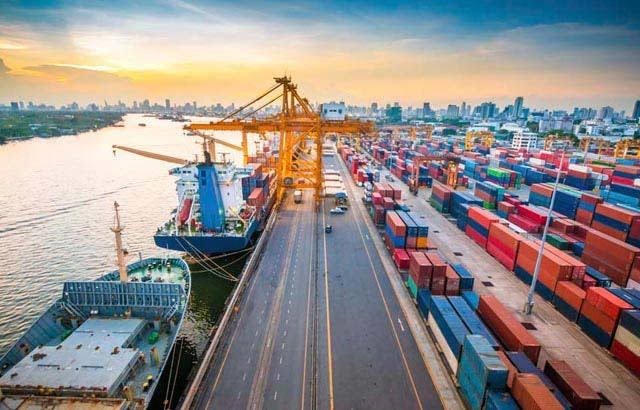
Nigeria could make significant progress in reducing transport-related carbon emissions by moving more freight from roads to coastal and inland waterways, maritime experts have said.
The experts said the country’s extensive coastline and inland waterways offered an immediate opportunity to cut fuel consumption, road congestion and emissions, but warned that poor infrastructure, weak port connectivity and fragmented policies were undermining the potential of coastal shipping.
President of the Nigerian Association of Master Mariners (NAMM), Capt. Tajudeen Alao, said coastal shipping could reduce emissions by as much as five times compared with conventional road haulage.
He explained that a single vessel could carry cargo equivalent to hundreds of trucks, thereby reducing the number of heavy-duty vehicles on the highways and lowering fuel consumption and carbon emissions.
Alao said Nigeria’s estimated 850-kilometre coastline and extensive inland waterways provided a strong foundation for a major shift in freight transportation from roads to waterways.
He, however, noted that the country had failed to fully exploit the advantage because of inadequate port connectivity and the absence of a coordinated national transport policy.
According to him, cabotage has largely been approached as an economic policy rather than as part of Nigeria’s climate response, while government ministries, departments and agencies continue to pursue policies in isolation.
He said the continued dependence on road transportation was worsening congestion, accelerating road deterioration and increasing the environmental cost of moving goods across the country.
“Global decarbonisation efforts are focusing heavily on alternative marine fuels such as ammonia and methanol, but the immediate opportunity to reduce emissions through modal shift is being overlooked,” Alao said.
He called for the development of a National Blue Transport Policy backed by incentives, dedicated terminals and cargo guarantees to encourage indigenous operators to expand coastal shipping.
Former President of the Nigeria Shipowners Association (NISA), Capt. Niyi Labinjo, said Nigeria also needed to address the regulatory and financial constraints preventing the sector from achieving scale.
Labinjo said domestic shipping had received comparatively limited attention in international decarbonisation frameworks because many mandatory International Maritime Organisation (IMO) measures were designed primarily around international shipping.
He said Nigeria’s cabotage framework had focused largely on developing indigenous shipping capacity rather than incorporating measurable environmental objectives.
Labinjo urged the Federal Government to pursue long-term investment in cleaner marine fuels while implementing immediate measures capable of reducing emissions, including shifting freight from roads to waterways and replacing ageing vessels.
He identified high vessel acquisition costs, inadequate green financing, poor waterways and regulatory waivers as major impediments to the expansion of cabotage.
He advised Nigeria to draw lessons from the European Union’s “Motorways of the Sea” programme and Norway’s deployment of electrified ferries.
Labinjo also recommended that access to the Cabotage Vessel Financing Fund (CVFF) be tied to measurable environmental performance, alongside transparent disbursement, tax incentives for cleaner vessels, emissions pricing and cargo guarantees.
He further advocated the gradual elimination of ministerial waivers under Sections 9 to 11 of the Cabotage Act and urged the government to prioritise CVFF funding for environmentally friendly vessels built or operated by Nigerian interests.
Another NAMM member, Capt. Femi Amusa, identified regulatory inconsistency, limited access to finance and inadequate coastal infrastructure as major obstacles to the growth of cabotage.
Amusa said countries including Norway, Japan and members of the European Union had demonstrated how coastal shipping could ease pressure on roads while reducing freight-related emissions.
He called for the establishment of green shipping funds, carbon-credit incentives and digital port systems to attract investment into Nigeria’s maritime sector.
Describing cabotage as a “low-hanging climate action”, Amusa said Nigeria could secure immediate environmental gains through greater use of waterways while gradually transitioning to cleaner marine fuels.