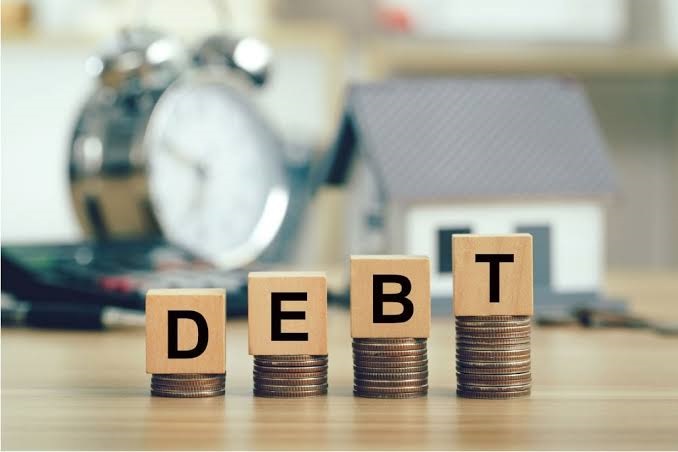
Nigeria’s public debt stock climbed to N159.35 trillion by March 2026, driven largely by a sharp increase in domestic borrowing, according to the latest data from the Debt Management Office (DMO).
The new figure represents a N9.96 trillion, or 6.7 per cent, increase from the N149.39 trillion recorded in March 2025, highlighting the continued expansion of government borrowing despite efforts to stabilise the debt profile.
The DMO’s public debt portfolio report showed, however, that the debt stock remained virtually flat compared with the N159.28 trillion recorded at the end of December 2025.
On a quarterly basis, the increase was only N75.51 billion, representing a marginal 0.05 per cent rise.
Domestic debt accounted for the larger share of the total debt at N87.4 trillion, representing 54.85 per cent, while external debt stood at N71.95 trillion, or 45.15 per cent.
The domestic component recorded the stronger annual increase, rising by N8.64 trillion, or 11 per cent, from N78.76 trillion in March 2025.
External debt, meanwhile, increased by N1.32 trillion, representing a 1.9 per cent rise from N70.63 trillion recorded a year earlier.
The composition of the debt stock also showed a shift between the end of 2025 and March 2026. Domestic debt increased by N2.55 trillion, or three per cent, from N84.85 trillion, while external debt declined by N2.48 trillion, or 3.3 per cent, from N74.43 trillion.
The Federal Government accounted for N82.88 trillion of the domestic debt stock, while state governments and the Federal Capital Territory accounted for N4.52 trillion.
In dollar terms, the country’s total public debt stood at $114.95 billion as of March 31, 2026, compared with $97.24 billion in March 2025.
The DMO said the external debt component was converted into naira using the Central Bank of Nigeria’s official exchange rate of N1,386.2156 to the dollar as of March 31.
The latest debt position comes amid continued efforts by the Federal Government to secure additional financing for infrastructure and other budgetary requirements.
On March 31, the National Assembly approved President Bola Tinubu’s request to obtain up to $6 billion in external borrowing, adding another potential source of financing to the government’s fiscal strategy.
The latest figures underline the growing importance of domestic debt management as the government seeks to finance its spending while limiting the cost and risks associated with a rapidly expanding debt burden.