
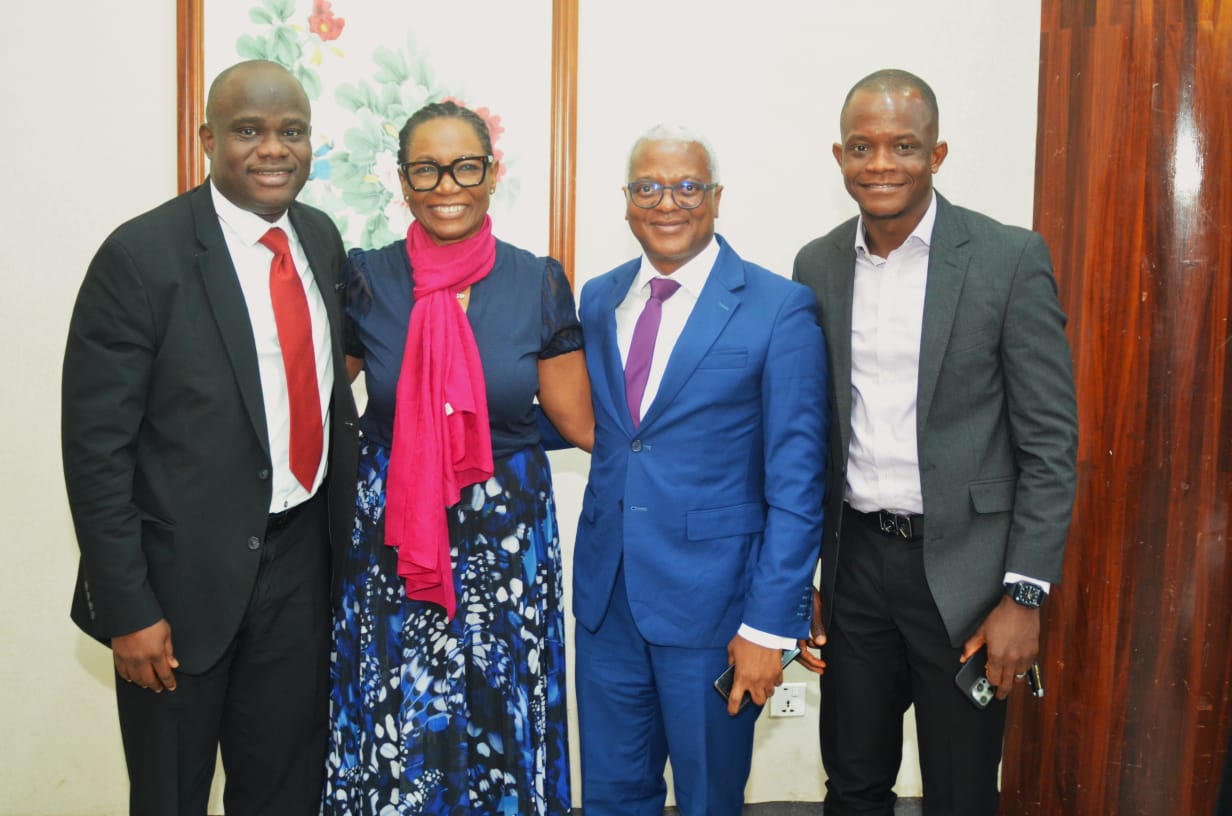
Mixta Africa has called for a comprehensive housing delivery system that addresses both supply and demand to tackle Nigeria’s housing deficit, stressing that public-private partnerships (PPPs) must go beyond land allocation to achieve large-scale housing delivery.
The Group Chief Commercial Officer of Mixta Africa, Tola Akinsulire, made the call during a CEO panel session themed “Public–Private Partnerships for Large-Scale Housing Delivery: Unlocking Housing at Scale Through Collaboration” at the Africa PropTech Priority Summit (APPSUMMIT 2026), organised by PROPTECH ROUNDUP in Lagos.
Akinsulire spoke alongside the Chief Executive Officer of UPDC, Odunayo Ojo, and the Co-Founder and Managing Partner of Alitheia Capital, Olajumoke Akinwunmi.
He said Nigeria had largely approached housing through isolated interventions focused on mortgages without addressing the underlying housing delivery ecosystem.
“What has worked elsewhere is a system that addresses both the supply and demand sides. In Morocco, we delivered 4,393 units on a single site because the government created that system,” he said.
Akinsulire explained that under Morocco’s housing programme in 2010, developers who committed to building homes at 250,000 dirhams and delivering at least 500 units within five years received tax credits across the value chain, including incentives relating to cement and company income tax.
He said the programme also provided incentives for homebuyers, who were exempted from value-added tax (VAT) on qualifying homes and supported by a government-backed guarantee scheme that covered up to 70 per cent of lenders’ credit risk after default.
According to him, the measures encouraged banks to provide financing and enabled more buyers to purchase homes.
“That is how you create a market — engineered on both the supply and demand sides,” he said.
On public-private partnerships in Nigeria, Akinsulire said governments must clearly establish whether such arrangements were primarily intended to generate revenue or provide affordable housing.
He explained that where a PPP was designed mainly for revenue generation, private developers would ordinarily be expected to bear a greater share of the commercial risk.
However, he said governments pursuing affordable housing interventions, particularly for civil servants, must be prepared to absorb some of the costs through infrastructure, land and other forms of support while agreeing on realistic housing prices.
Akinsulire identified trust, buyer affordability and developers’ capacity to deliver as three critical factors for successful PPPs in the housing sector.
He noted that the Federal Ministry of Housing’s Housing Delivery Framework introduced in January and its subsequent policy framework later in the year addressed trust and affordability but argued that more attention was needed to strengthen developers’ delivery capacity.
“The Federal Ministry of Housing’s Housing Delivery Framework in January and its subsequent policy framework later in the year address trust and affordability, but we are not addressing how to enhance developer delivery capacity. If people have money and there are no houses to buy, we still have the same problem,” he said.
He also urged technology innovators to develop solutions across the real estate value chain, including land titling, approvals, construction monitoring, property sales and off-plan financing.
According to him, technology must either reduce friction or minimise risk to make a meaningful contribution to housing delivery.
“Technology must either reduce friction or reduce risk. From land titling, to approvals, construction monitoring, sales and off-plan finance. Be the part of the pipeline that if you are removed, the pipeline breaks,” he said.
Akinsulire cited the growth of financial technology companies in Nigeria as an example for the property technology sector, noting that eight of the country’s top 20 financial institutions were fintech companies.
“That is how PropTech should think,” he added.
Also speaking, Akinwunmi of Alitheia Capital identified the lack of structured engagement, clear frameworks and trust as major obstacles to effective public-private partnerships in the housing sector.
She called for greater collaboration among stakeholders and urged governments to provide development-ready projects rather than relying solely on land banks.
According to her, some projects encounter unresolved land ownership disputes, compensation issues and unbuildable portions after agreements have been reached, undermining the readiness of proposed housing developments.
She also advocated transparent procurement processes and the development of a strong local industrial base to support housing delivery.
Akinwunmi estimated that Nigeria’s housing challenge affected roughly 30 million housing units, comprising a deficit of about 15 million homes and more than 15 million existing homes considered structurally inadequate or substandard.
In his remarks, Ojo described housing as fundamentally an economic problem driven by rising government charges, low incomes and the need for appropriate incentives.
He questioned the possibility of delivering cheaper housing when government rates and charges had tripled within the year.
“Rates and charges have tripled this year, yet we say we want cheaper housing. We need tax breaks and pioneer status incentives for housing like other industries,” he said.
Ojo also called for the promotion of build-to-rent housing, arguing that many Nigerians could not afford to purchase homes even with zero-interest mortgages because of their low income levels.
He further urged stakeholders to collaborate to reduce overhead costs and improve housing affordability across the country.