African governments have adopted a landmark continental agenda to transform pastoral livestock into a major driver of trade, investment and economic growth, ending the inaugural African Pastoral Markets Forum with commitments to dismantle barriers to livestock trade, mobilise private capital and accelerate implementation of reforms under the African Continental Free Trade Area (AfCFTA).
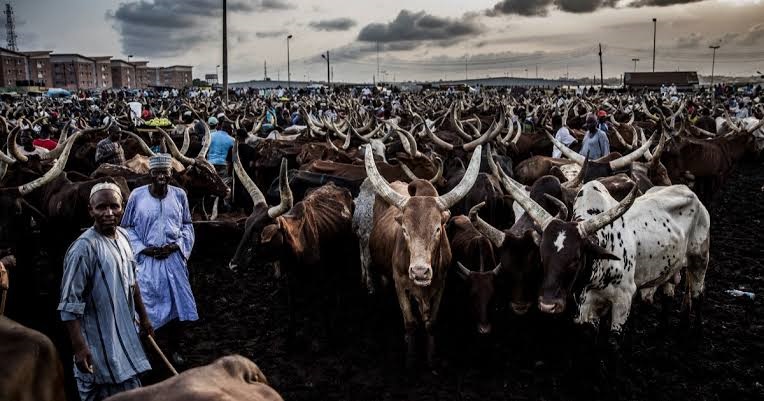
The five-day forum, convened by the African Union Inter-African Bureau for Animal Resources (AU-IBAR), concluded on Friday with ministers, policymakers, development finance institutions, investors and private sector leaders agreeing that Africa’s vast pastoral livestock resources must be repositioned from a largely informal livelihood system into a competitive commercial industry capable of creating jobs, strengthening food security and boosting intra-African trade.
The meeting also resolved to deepen collaboration between governments, financiers and businesses to unlock investment across livestock value chains, while announcing that the Second African Pastoral Markets Forum will be held from July 19 to 22, 2027, to assess progress and broker new commercial partnerships.
Closing the forum, AU-IBAR Director Dr. Huyam Salih said the meeting had given Africa’s pastoral livestock economy a stronger continental mandate and elevated it to the centre of the continent’s economic transformation agenda.
“This Forum has positioned pastoral livestock as a strategic economic asset for food security, jobs, trade, resilience, value addition and regional integration,” she said.
According to Salih, discussions throughout the week brought together governments, pastoral communities, financial institutions, development finance institutions (DFIs), investors and agribusinesses to identify practical solutions for integrating pastoral producers into structured markets through aggregation, processing, logistics, finance and regional trade.
She said the ministerial session produced clear political commitments centred on three priorities: introducing policies that lower the cost of formal livestock trade and encourage private sector participation; creating financing mechanisms capable of unlocking investment across livestock value chains; and investing in regional public goods—including livestock corridors, animal health systems, water infrastructure, logistics, energy and market assurance—that are essential for competitive livestock markets.
Salih said AU-IBAR, through its African Pastoral Markets Development (APMD) initiative, will coordinate implementation of the forum’s resolutions by supporting scalable business models, strengthening the investment case for pastoral livestock and maintaining engagement with governments, financiers and development partners.
Looking ahead to next year’s implementation phase, she said the 2027 forum will move “closer to the marketplace” by bringing together processors, logistics companies, technology firms, veterinary service providers, feed producers, traders, financial institutions and pastoral producer organisations to structure commercially viable partnerships.
“We intend for the next Forum to move even closer to the marketplace,” she said. “The objective will be to deepen the market conversation, structure partnerships and accelerate investment around practical value-chain opportunities.”
Representing the Gates Foundation, Senior Officer for Livestock and Economic Opportunity, Dr. Tom Osebe, said the forum marked a significant shift in Africa’s livestock policy by framing pastoralism as an economic growth opportunity rather than a humanitarian concern.
“We leave with something rare: a communiqué adopted by our ministers themselves that speaks about pastoral livestock not as a humanitarian concern, but as an economic opportunity,” he said.
“But success will not be measured by that communiqué. It will be measured by implementation.”
Osebe noted that the forum facilitated direct engagement between livestock enterprises and financiers through investment pitches, blended finance discussions and co-investment roundtables designed to mobilise private capital into the sector.
He, however, warned that one of the biggest threats to Africa’s livestock competitiveness remains transboundary animal diseases, particularly Foot-and-Mouth Disease (FMD), which continues to discourage investment and restrict access to premium export markets.
Diseases such as Peste des Petits Ruminants (PPR), Rift Valley Fever and Lumpy Skin Disease, he added, continue to impose heavy economic costs on pastoral communities across the continent.
Osebe urged African governments to open up disease surveillance, laboratory services, vaccine manufacturing and animal traceability systems to greater private sector participation, arguing that stronger public-private partnerships would improve investor confidence and market access.
Highlighting the economic opportunity, he said Africa imports livestock products worth more than $10 billion annually while exporting less than $4 billion, resulting in the loss of processing, logistics and veterinary jobs that could be created locally.
“Every dollar of that import bill is a processing job, a logistics job and a veterinary job that we have exported along with it,” he said.
He also pointed to emerging opportunities in Asian markets, particularly China’s zero-tariff access for African exports, but stressed that African countries must strengthen sanitary and phytosanitary systems and livestock traceability to benefit from those opportunities.
“Zero tariffs do not mean zero barriers,” he cautioned.
Nigeria’s Minister of Livestock Development, Idi Mukhtar Maiha, said the forum had fundamentally changed the narrative around pastoralism by placing it at the heart of Africa’s economic development agenda.
“For too long, pastoralism has been viewed through the lens of marginal traditional livelihoods. We must mainstream pastoralism, transforming it into a modern, dynamic and commercially viable engine of growth,” he said.
Maiha urged African governments to use the AfCFTA to build an integrated livestock market capable of meeting the continent’s rapidly growing demand for meat, milk and other livestock products.
He also challenged financial institutions to redesign lending models for livestock producers by providing affordable, long-term financing tailored to the realities of pastoral production systems.
“The success of this forum will not be measured by the eloquence of speeches, but by the value of our actions,” he said, calling on Member States to implement the commitments contained in the ministerial communiqué without delay.
As delegates departed Addis Ababa, the consensus was that the continent now has both the political backing and a clear implementation framework to transform pastoral livestock into one of Africa’s strongest drivers of industrialisation, regional integration and economic prosperity. The challenge, participants agreed, is to convert the commitments made at the forum into investments, policy reforms and increased trade before leaders reconvene in 2027.