I listened to the scorecard on fuel subsidy removal presented by the Ministry of Finance about the details of the amount realized from the removal of fuel subsidy in Nigeria, the assumption that the fuel subsidy benefits the rich more than the poor in Nigeria, the assumption that fuel subsidy encourage smuggling of premium motor spirit (PMS), and the Nigeria citizen life will get better after the fuel subsidy removal have shown that the first two may be correct but the life of citizen has worse-off.
According to the minister of finance Taiwo Oyedele 15.8 trillion is the estimated subsidy savings/resources mobilized, not that this amount in cash is deposited into the Government account, the said total amount is the estimated amount across the federation between June 2023 and December 2025, the sum of 5.43 trillion is accrued to the federal Government which is 34.45, the state government is 6.52 trillion, which is 41 per cent, while the sum of 3.88 amounting to 24.65 goes to the local Government.
My curiosity immediately goes to check on a month-by-month analysis of the amount, but in the minister’s analysis, the methodology was more counterfactual, which actually analyzed what would have been if the fuel subsidy was not removed; it models hypothetical reality to compare against actual performance.
The major factor the report harps on was many states’ inability to pay workers’ salaries, which reflects fiscal sustainability in the Nigerian government; the government can now enjoy fiscal policy because it has more revenue in Naira terms.
More revenue is now available for the three tiers of the Nigerian government: states and local governments. As at 2023, according to the Federal Account Allocation Committee (FAAC), they shared ₦786.161 billion, while in December 2025 distributed a total of ₦1.969 trillion, and in July 2026, FAAC) distributed a record total sum of ₦3.007 trillion as revenue for July 2026 among the three tiers of government in Nigeria.
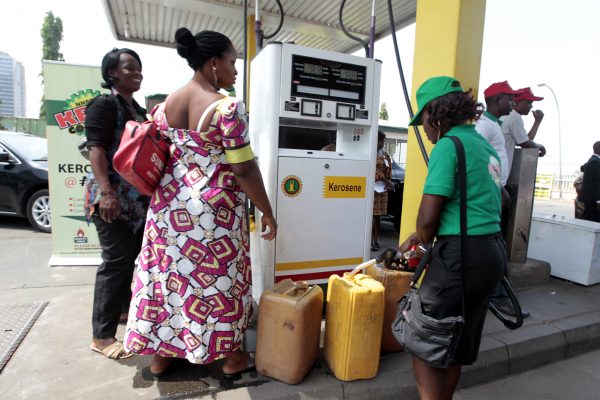
The major challenges of Nigerians after the fuel subsidy removal are the current hardship that average Nigerians are suffering; the price of fuel moved on May 2023 from ₦185 to N488 in Abuja, ₦537 in Lagos, and ₦600 in some places, but as of December 2025, which the report captured, the average price nationwide, according to the NBS average price actually paid by consumers nationwide is ₦1,048.63.
Fuel subsidy removal makes the price of fuel rise; the price of transport increases geometrically; prices of food skyrocketed; the cost of living increases for every household; farmer production costs increased; businesses also increase their prices as manufacturers and traders also face higher costs for transportation of raw materials, finished products, employees, and inventory.
The greatest beneficiaries of the fuel subsidy removal are the federal government of Nigeria and the subnational governments, as they have more fiscal liquidity and more revenue to expend on federal and state government projects.
The citizens pay the price of fuel subsidy removal; it is expected to last for a short time, but it seems it is getting worse, even though it was acknowledged by the Minister of Finance; the acknowledgement does not give the citizens more purchasing power or more disposable income; it appears it has pushed more Nigerians into poverty. For a poor household, 70 per cent of their income is spent on food; rent, school fees, and health care costs have skyrocketed.
World Bank warned that the fuel subsidy will push more Nigerians into poverty if it is not well managed; they advise direct cash transfers to households, expansion of social protection, and redirection of fuel subsidy savings toward development.
After the fuel subsidy removal, a major reform on Naira-forex unification was introduced that worsened the Nigeria citizen poverty situation; fuel subsidy and Naira unification directly affect households. Implementing the two has worsened the economic life of Nigeria, as both affect households.
The consequence of the fuel is still living with us, debt servicing has increases and it is taking chunk of the money we should be using for capital expenditure that we create more social infrastructure like school, health care, road among other social infrastructure, the cost borrowing has also increase significant, interest rate (MPR) was 18.5 per cent as at May 2023 which allow manufacturing sector, MSME to access capital for business, but as at today it is 26.5 per cent which discourages business and create more job loss and unemployment, this is 43.2 per cent increase in the cost of borrowing in Nigeria between May 2023 and now.
It is pretty difficult to measure the positive impact of fuel subsidy removal on the Nigeria citizen after three years, more question is that, where is the result of the 15.8 trillion realized from the removal? Where are the productive investments, social protection results, and fiscal improvements to compensate for the inflationary shock imposed on households and businesses?
Government must create solutions to the continuous consequences of fuel subsidy by creating extra effort to increase the availability of CNG stations and considering subsidies in the area of transportation of agricultural produce through an effective food supply chain and repair of farm-to-market roads. The government must move out of occasional palliative to household to a more reasonable, sustainable solution.

Friday, October 23, 2026
Economics Of Fuel Subsidy Removal: Nigeria’s N15.8trn Gain And Cost To The Citizen