
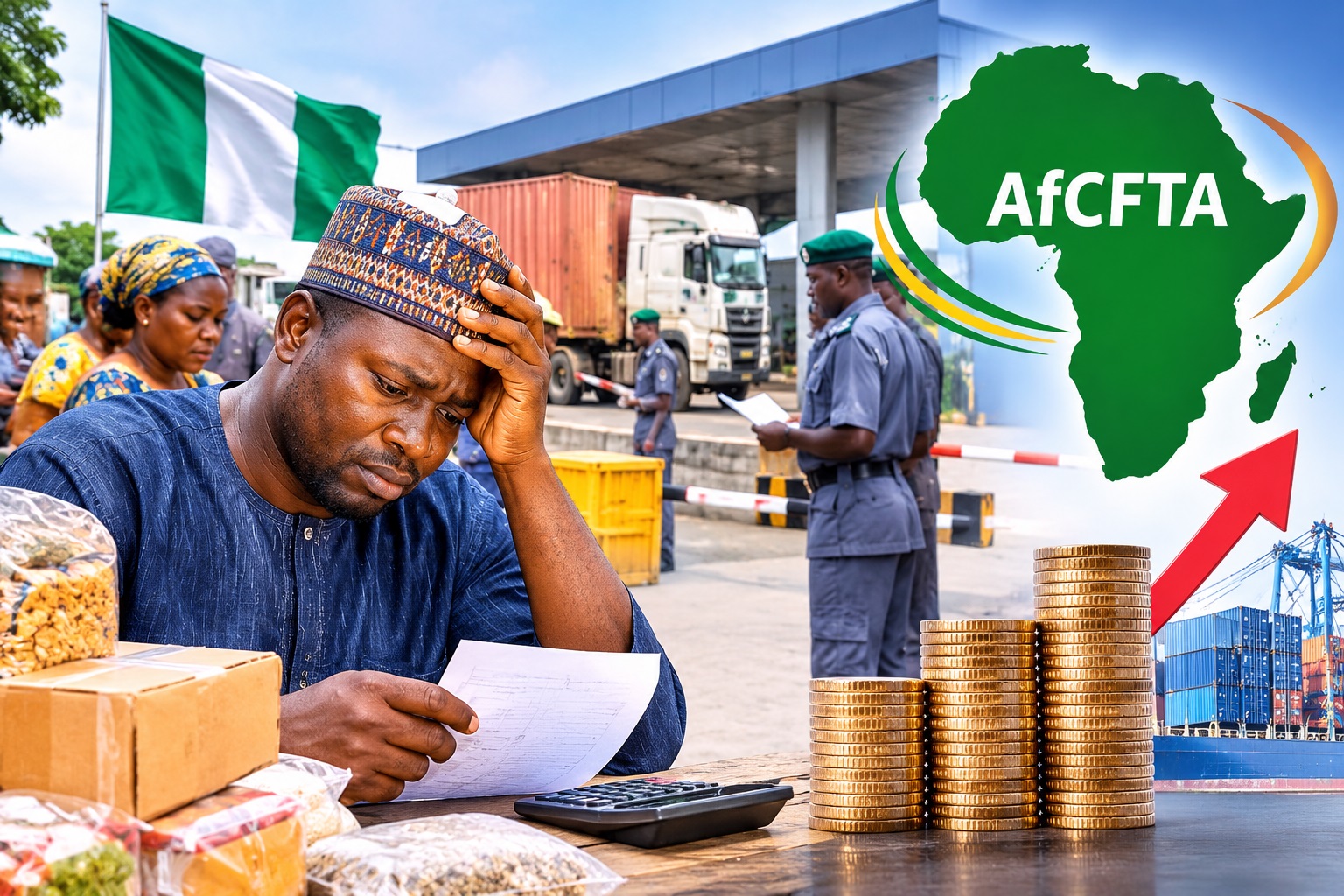
High production costs, expensive logistics and persistent border delays are shutting Nigerian micro, small and medium enterprises (MSMEs) out of the African Continental Free Trade Area (AfCFTA) market, industry stakeholders have warned.
They cautioned that unless these challenges are addressed, many small businesses could remain unable to exploit the continental trade agreement’s promise of wider market access, reduced tariffs and increased opportunities for non-oil exports.
A market survey by the Network of Practising Non-Oil Exporters of Nigeria (NPNEN), supported by UK International Development, found that 66 per cent of surveyed exporters recorded export values below $50,000, while 62 per cent of identified export constraints occurred before goods reached the border.
The survey also revealed that 34 per cent of exporters identified shipping costs as a major constraint, while 37 per cent frequently experienced shortages of working capital. Only half had completed at least one shipment in the preceding 24 months, highlighting the difficulties many businesses face in sustaining regular export activities.
The findings underscore concerns that Nigerian SMEs lack the production capacity, financing and logistics support needed to compete effectively in African markets.
Speaking during a media chat, SME expert and member of the Lagos Chamber of Commerce and Industry (LCCI), Dickson-Okezie, identified rising operating costs as a major challenge for local businesses.
He cited expensive electricity and other services, alongside the high cost of machinery and equipment, as factors undermining the competitiveness of Nigerian enterprises.
The Africa Association of Professional Freight Forwarders and Logistics of Nigeria (APFFLON) has similarly warned that poor infrastructure, inadequate electricity supply, multiple taxation, foreign exchange constraints, excessive port charges and cumbersome export procedures could undermine Nigeria’s competitiveness under AfCFTA.
APFFLON National President, Frank Ogunojemite, argued that access to credit alone would not resolve the challenges confronting manufacturers and exporters, stressing the need for an enabling business environment.
He noted that small businesses were particularly vulnerable because they lacked the economies of scale that allow larger companies to negotiate favourable freight rates, absorb unexpected charges or maintain substantial inventories while awaiting clearance.
Consequently, the combined costs of production, packaging, certification and transportation can make export transactions unprofitable, even when buyers are available in other African countries.
Similarly, the president of the Association of Small Business Owners of Nigeria (ASBON), Dr Femi Egbesola, described the pressure on small businesses as a humanitarian crisis during a media chat.
He called for the removal of export barriers and improvements in logistics, arguing that SMEs should occupy a central position in Nigeria’s export development strategy.
Border delays and administrative bottlenecks further increase the cost of moving goods across West Africa, limiting the ability of Nigerian businesses to compete in regional markets.
The Nigerian Association of Chambers of Commerce, Industry, Mines and Agriculture (NACCIMA) identified multiple checkpoints, delays at border posts and other non-tariff barriers during a road trip by a delegation led by its National President, Jani Ibrahim, from Lagos through the Seme border towards Lomé, Togo.
The association warned that these obstacles increase the cost of doing business and weaken the competitiveness of Nigerian exports within the sub-region.
The World Bank’s August report, Integrating Africa: From Threads to Hubs, also identified inefficient customs clearance, regulatory misalignment, weak logistics services, fragmented transit systems and inadequate infrastructure as major sources of trade costs across the continent.
The report noted that tariff reductions alone would not significantly lower trade costs without improvements in transportation, customs administration and regulatory coordination.
Chief executive officer of the Centre for the Promotion of Private Enterprise (CPPE), Dr Muda Yusuf, has similarly stressed that access to a larger market would deliver limited benefits without a strong domestic production base.
“The key to benefiting from AfCFTA lies in having something substantial to trade,” he said, emphasising the importance of manufacturing capacity and product quality.
Businesses must also contend with product standards and regulatory requirements in their destination markets, which can increase the cost of accessing regional trade opportunities.
At an AfCFTA trade-in-goods webinar in September 2026, the Nigeria AfCFTA Coordination Office, the Nigerian Export Promotion Council (NEPC) and the National Agency for Food and Drug Administration and Control (NAFDAC) urged exporters to improve product quality, expand production capacity and familiarise themselves with the requirements of their target markets.
The national coordinator and chief executive officer of the Nigeria AfCFTA Coordination Office, Patience Okala, advised businesses to determine whether their products qualified for preferential treatment under the agreement and consult relevant tariff information before exporting.
Similarly, NAFDAC’s chief regulatory officer in its International Strategic Partnership and Trade Office, Haleemat Kadiri, warned that failure to meet applicable standards could lead to consignments being rejected or destroyed, as well as damage to commercial relationships.
She identified contamination, excessive pesticide residues, heavy metals and missing health certificates among the reasons Nigerian products could be rejected.
For small agricultural exporters, food processors and cosmetics manufacturers, meeting these requirements often involves additional expenditure on laboratory testing, certification, labelling and traceability. Without adequate financing and technical support, such costs could discourage businesses from entering export markets or expanding their operations.
Meanwhile, Nigeria’s non-oil export earnings have continued to rise. Figures attributed to NEPC in an October 2026 report by LEADERSHIP showed that receipts increased to $6.1 billion in 2025 from $5.46 billion in 2024, while export volumes rose from 7.29 million tonnes to 8.02 million tonnes.
However, the figures did not establish how much of the growth resulted specifically from AfCFTA preferences. Rising export earnings alone do not demonstrate that smaller businesses are benefiting significantly from the agreement.
The Federal Government has introduced measures to improve Nigeria’s participation in AfCFTA, including gazetting the country’s provisional schedule of tariff concessions for trade in goods in April 2025.
The Ministry of Industry, Trade and Investment also reported establishing an export air-cargo corridor to East and Southern Africa in collaboration with Uganda Airlines and the United Nations Development Programme. Cargo rates on the corridor were reported to be 50 to 75 per cent below comparable market rates.
The ministry has also published market intelligence covering cosmetics, agro-processed products and textiles across 13 East and Southern African markets.
In addition, the proposed $1 billion AfCFTA credit facility is intended to support exports and strengthen industrial competitiveness.
However, industry stakeholders maintain that financing initiatives will have limited impact unless businesses also benefit from lower operating costs, improved infrastructure and simpler export procedures.
They have called for more reliable electricity, efficient ports, affordable working capital, export insurance and practical training on rules of origin, certification, tariff concessions and export documentation.
Cargo consolidation, which allows smaller exporters to combine consignments and share transportation costs, has also been identified as a potential way to make shipments more affordable.
Industry advocates have further stressed the need for effective mechanisms to identify and resolve non-tariff barriers, including excessive delays, unexpected border charges and cumbersome documentation.
For Nigerian SMEs, the challenge is no longer simply gaining access to a continental market but developing the capacity to produce competitively, transport goods affordably, meet regulatory requirements and deliver consignments on schedule.
Until these obstacles are addressed, stakeholders warn, the benefits of AfCFTA may remain concentrated among better-capitalised businesses, leaving many smaller enterprises unable to translate the agreement’s promise into sustainable export growth.