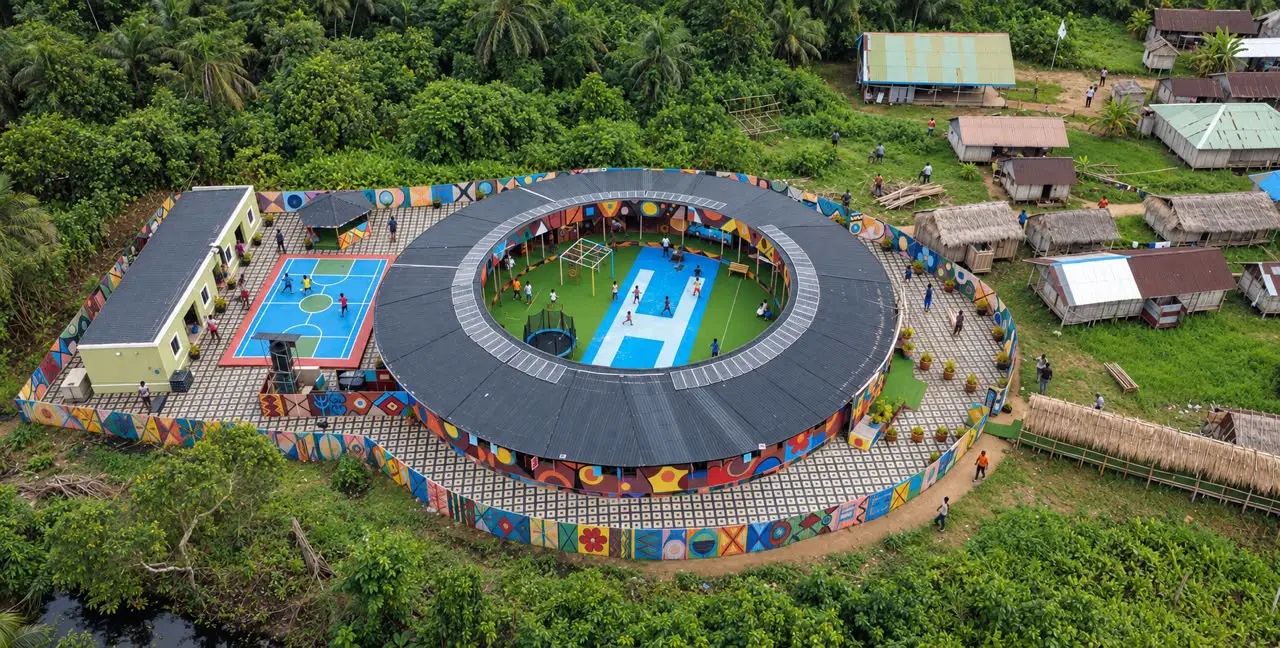
Slum2School Green Academy in Epe, Lagos, has won the 2026 World’s Best School Prize for Environmental Action, becoming the first Nigerian school to win the global award and the first African institution to emerge winner in the category.
Established by Slum2School Africa, the school serves approximately 250 pupils from eight riverine communities. Its infrastructure features bamboo construction, solar power, rainwater harvesting and technology that converts organic waste into cooking gas.
The project received seed funding from the bioMérieux Fund, development support from the Royal Norwegian Embassy and digital learning facilities from HP, highlighting the role of institutional and corporate partnerships in financing sustainable education infrastructure.
Endorsing the award, Mariah Levin, former Founding Executive Director of BeVisioneers: The Mercedes-Benz Fellowship, said the initiative was expanding educational access while promoting climate adaptation.
“The work of Orondaam Otto and his team expands access to education while promoting communities’ climate adaptation. The Slum2School model is exciting because it promises to help rising generations to achieve greater appreciation for the ways in which climate change will shape their economic and social context and opportunities.
“This is what we need around the world: For kids to learn how to prepare climate resilient livelihoods and lifestyles from early ages, alongside more traditional academics, so that they are empowered to create hopeful futures,” she said.
The Head of Growth and Operations at Slum2School Africa, Lois Ifeanyichukwu, said the recognition demonstrated that access to quality education should not depend on where children are born or the limitations of their communities.
“For us, this recognition is about much more than winning a global school prize. It is about demonstrating that a child’s access to quality education should never be determined by the geography of their birth or the limitations of the community they grow up in.
“In Saga Island, we set out to build more than a school. We wanted to create a learning environment that responds to its surroundings, demonstrates what sustainable infrastructure can look like and gives children access to the opportunities they deserve.
“From the bamboo structures and solar energy to rainwater harvesting and the conversion of organic waste into cooking gas, every element reflects our belief that sustainability and quality education must go hand in hand.
“This achievement belongs to the children, their families, the community and every partner who believed in this vision. We hope it inspires greater investment in locally driven education innovations and demonstrates what becomes possible when we work together to ensure that no child is left behind,” she said.

Tuesday, November 24, 2026
Nigeria’s Slum2School Academy Wins Global Prize For Environmental Action