What happens when energy giants step beyond oil rigs and gas pipelines to power classrooms instead? Increasingly, it signals a new phase in Nigeria’s development story — one where the private sector is not just extracting resources but also investing in the nation’s most critical asset — its people.
With an estimated 18.3 million Nigerian children currently out of school as of late 2024 — the highest figure globally according to UNICEF — the gaps in public education are stark. To bridge them, companies like Seplat Energy, in partnership with NNPC Upstream Investment Management Services (NUIMS), are stepping forward.
Their investments in education — from AI-powered career guidance to student-built vehicles — are redefining what corporate social investment looks like in a country where the future depends on unlocking the potential of its young minds.
Against this backdrop, private sector players — especially in the oil and gas industry — are stepping into spaces once seen as government’s exclusive domain. Companies such as Seplat Energy, in collaboration with NUIMS, are investing not only in classrooms but in the futures of students who may one day lead Nigeria’s transition from a resource-driven to a knowledge-driven economy.
Beyond Philanthropy: Education as Strategy
Seplat Energy’s foray into education is not a mere act of goodwill. Rather, it reflects a growing realization that Nigeria’s youth are critical stakeholders in the country’s long-term stability and prosperity. Through initiatives such as the Seplat JV PEARLs Quiz and its STEAM (Science, Technology, Engineering, Arts and Mathematics) programmes, Seplat and NUIMS are positioning themselves as enablers of the country’s human capital development.
As Chioma Afe, Seplat Energy’s Director of External Affairs and Social Performance (represented by Grace Amadi, GM, Partner Relations, at the event) explained: “This is a laudable initiative by the NNPC/Seplat JV dating back over 12 years. We are happy that this has got to Imo State. This is to ensure that we have students who can compete globally and mould them into world beaters.”
These efforts come at a time when employers worldwide increasingly emphasize problem-solving, digital literacy and adaptability. For oil and gas companies whose operations are being reshaped by artificial intelligence, data analytics and automation, nurturing a future workforce that understands science and technology is more than corporate social investment — it is strategic risk management.
The PEARLs Quiz: Inspiring Brilliance in Imo State
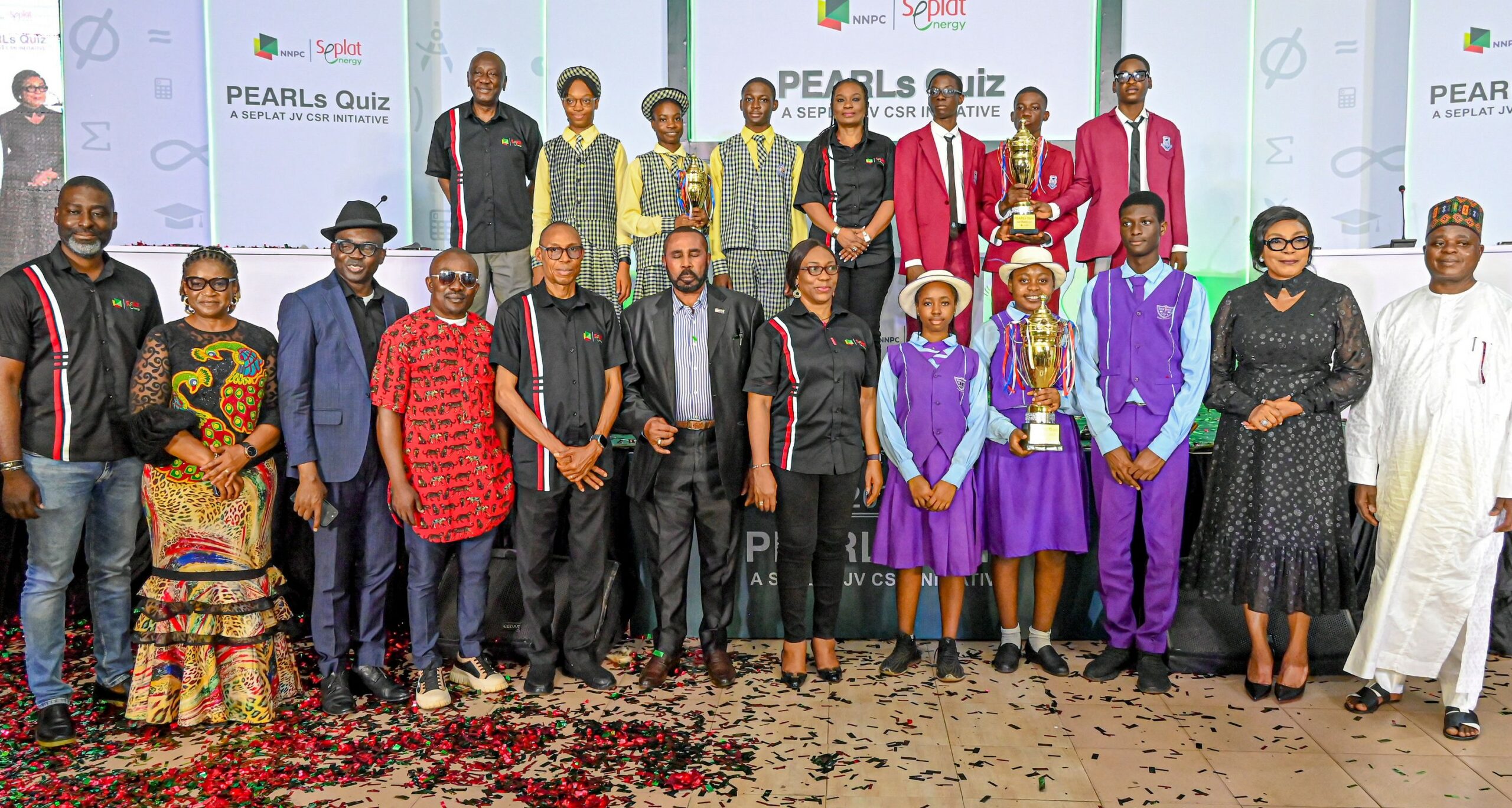
When the Seplat JV PEARLs Quiz arrived in Imo State, it was not just another academic competition. It was a deliberate intervention designed to spark excitement around learning, teamwork and intellectual curiosity. The 2025 edition culminated with Avana Model Secondary School lifting the trophy, cheered not only by their peers but also by students from competing schools — a demonstration of sportsmanship that captured the programme’s deeper intent.
This spirit underscored the point that Seplat and NUIMS aim to drive hope, as education is not only about grades or rankings but about shaping character, building resilience and nurturing collaboration. The lessons learned in quiz halls — how to share success, confront setbacks and strive with integrity — are lessons that will shape tomorrow’s citizens as much as any classroom lecture.
Governor Hope Uzodinma, represented by Commissioner for Education, Prof. B.T.O. Ikegwuoha, reinforced this during the finale: “The emphasis should not be on winning but drawing valuable lessons from participating, which should spur you to take on greater challenges in the future to make yourselves and Imo State proud.”
Shifting From Rote Learning to STEAM Empowerment
For decades, Nigeria’s education system has been criticized for emphasizing rote memorization over practical application. Employers frequently lament graduates’ lack of problem-solving skills or readiness for modern workplaces. Recognizing this gap, Seplat and NUIMS have deliberately embedded STEAM into their education interventions.
The initiatives go beyond textbooks and chalkboards. They provide access to career guidance tools powered by artificial intelligence, expose students to e-business portals and even encourage them to tinker with telescopes and robotics kits. In some cases, students are guided to build model vehicles, directly applying engineering concepts learned in class.
At the Owerri finale, six schools were rewarded with ₦250,000 each for STEAM projects such as an electronic-driven vehicle, a telescope, an AI career guidance system, a modern house design, an oil drilling model and a fashion e-business portal. By spotlighting invention and problem-solving, Seplat and NUIMS affirmed that brilliance includes creativity and innovation, not just memory recall.
Linking Local Impact to National Needs
Seplat’s interventions in Imo State are a microcosm of the national challenge: how to prepare millions of Nigerian students for a rapidly evolving global economy. Nigeria has one of the largest youth populations in the world, with nearly 70% under the age of 30. Without adequate preparation, much of this demographic dividend risks being wasted in the transition to a digital economy.
Energy companies have unique incentives to intervene. Their operations depend heavily on science and engineering expertise — disciplines where Nigeria faces a critical shortfall. By supporting STEAM education, companies like Seplat and NUIMS help build the talent pipeline needed for their industries while also addressing broader developmental goals.
NUIMS’ Chief Upstream Investment Officer, Engr. Seyi Omotawa (represented by Minanengiyeofori Loveday, Lead, Community Relations) captured this dual purpose: “Our partnership with Seplat Energy exemplifies our sheer commitment to investing in the future of our youth. It is not just about competition; it is about learning, growing and connecting with your peers. The friendship you forge and the knowledge you gain will serve you well in your future endeavours.”
Why Oil and Gas Firms Are Unlikely Champions of Education
The involvement of oil and gas firms in education might seem counterintuitive at first glance. Yet it makes sense when seen through the lens of corporate sustainability. The extractive industries face intense scrutiny regarding their social license to operate. Host communities expect more than token philanthropy — they demand real investments that address long-standing socio-economic gaps. Education fits squarely into this expectation.
Salihu Garba of the Nigerian Upstream Petroleum Regulatory Commission (NUPRC) praised Seplat for this alignment: “We commend Seplat Energy Plc for upholding excellence in business operations and taking the initiative to the education sector to help groom leaders of tomorrow.”
Moreover, the global energy sector itself is undergoing transition. As companies explore renewables, automation and advanced exploration techniques, their demand for highly skilled technical talent is rising. By seeding STEAM education at the grassroots level, firms like Seplat are future-proofing their own industries while simultaneously stabilizing the communities in which they operate.
A Broader Private Sector Trend
Seplat is not alone in this approach. Across Africa, multinationals in mining, oil and gas are increasingly investing in education. From scholarship programmes to digital skills boot camps, the private sector is bridging gaps where public budgets fall short.
What distinguishes Seplat’s model, however, is its deliberate focus on both excellence and inclusivity — rewarding top-performing schools while also inspiring a broader culture of learning. Ibi-Ada Itotoi, Managing Director, Eastern Asset, Seplat Energy (represented by Emmanuel Otokhine, Base Manager, Eastern Asset) reflected this when she told the students: “All of you are winners already. We encourage you to build on the confidence earned from participating in the Seplat PEARLs Quiz to guide you in achieving great heights in your future endeavours.”
More Than a Trophy
When Avana Model Secondary School lifted the 2025 PEARLs Quiz trophy for the Eastern Asset, the applause was loudest not for the prize money but for the sportsmanship on display. Competing schools joined in celebrating their peers’ success, embodying the very lesson the programme sought to teach: that success is sweeter when shared, that setbacks are stepping stones and that the true purpose of education is not just producing champions but shaping character.
This philosophy is what transforms a quiz into a leadership incubator. By embedding values of collaboration, resilience and empathy, Seplat’s initiative aligns with the deeper goals of national development.
The Road Ahead: Scaling for Impact
The challenge remains scale. For every student who participates in the Seplat/NUIMS programme, thousands more still lack access to quality science labs, digital tools or trained teachers. The real test will be how to extend such interventions in Imo and other states, embedding them within formal education systems rather than as standalone projects.
As the Imo State government pledged during the finale: “Seplat, let us do this again next year. We assure you of the backing of the state government, a conducive environment to operate and to impact the host community meaningfully as we are witnessing today.”
Policymakers must therefore see corporate initiatives not as isolated acts but as models for replication. With the right frameworks, Nigeria could channel private sector energy into building a robust public-private partnership for education, ensuring that the benefits extend far beyond selected communities.
From Rigs to Classrooms: A Shared Responsibility
Nigeria’s education crisis is too vast for government alone to solve. With tens of millions of students to educate, partnerships are no longer optional — they are essential. Seplat and NUIMS demonstrate how energy giants can move beyond oil rigs and into classrooms, translating corporate resources into national dividends.
As the applause fades in Owerri and the winners carry their trophies home, the real victory lies in the seeds of curiosity, character and innovation planted in every child who participated. These are the victories that matter, for they will shape not only the future of individual students but the destiny of a nation determined to thrive in a knowledge-driven world.