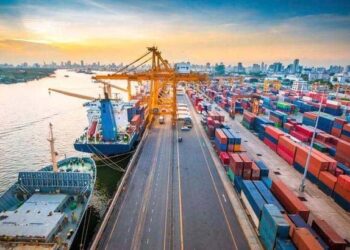
At a time when Nigeria is urgently seeking sustainable pathways to economic stability, poverty reduction, and mass job creation, it has become increasingly clear that the nation must rethink its development priorities. While agriculture, oil and gas, technology, and manufacturing all hold value, none offers the scale of untapped opportunity that lies within Nigeria’s blue economy and maritime sector.
It is time for the federal government to invest more aggressively in the blue economy than in any other sector, not as an experiment but as a strategic national imperative.
A Sector With Vast Untapped Potential
Nigeria is geographically positioned as a maritime powerhouse. With over 850 kilometres of Atlantic coastline and access to the Gulf of Guinea, the country sits on one of the busiest maritime routes in Africa. Additionally, Nigeria is blessed with extensive inland waterways, including the River Niger and River Benue systems, as well as numerous lakes and dams.
Yet despite these natural advantages, the maritime sector contributes far below its potential to the national GDP. Ports remain underoptimi sed, inland waterways underutilised, fisheries underdeveloped, and coastal tourism largely unexplored.
A nation surrounded by water should not be surrounded by economic stagnation.
Job Creation At Unmatched Scale
No other sector has the capacity to generate employment across such a wide spectrum of skill levels as the blue economy. From artisanal fisheries to industrial aquaculture, from shipbuilding and repairs to maritime logistics, from port management to marine biotechnology, the opportunities span both formal and informal sectors.
Unlike capital-intensive industries that employ only a limited number of skilled workers, the maritime sector can employ millions of fishermen, boat builders, marine engineers, dockworkers, environmental scientists, processors, exporters, and entrepreneurs.
Investing in fisheries and aquaculture alone could significantly reduce Nigeria’s dependence on fish importation while creating rural jobs. Developing shipbuilding and maintenance hubs would stimulate industrial growth. Expanding coastal tourism would empower local communities.
If properly harnessed, the blue economy can become Nigeria’s largest employer of labour.
A Powerful Tool For Poverty Alleviation
Poverty in Nigeria is most severe in rural and coastal communities. Ironically, these communities sit closest to abundant aquatic resources. By investing in modern fishing techniques, cold chain logistics, processing facilities, and export frameworks, the government can raise incomes at the grassroots level.
The blue economy directly connects natural resources to livelihoods. It allows small-scale operators to participate in global value chains. It empowers women in the fish processing and marketing sectors. It supports youth entrepreneurship in aquaculture and marine services.
Few sectors distribute wealth as inclusively as the maritime ecosystem.
Economic Diversification Beyond Oil
For decades, Nigeria’s economic health has fluctuated with global oil prices. The volatility of crude markets has repeatedly exposed the risks of mono-product dependence. Meanwhile, countries that invested heavily in maritime trade and ocean-based industries have built resilient economies.
The global shipping industry drives over 80 per cent of world trade by volume. Nigeria, as Africa’s most populous nation, should be a dominant maritime hub, not merely a participant.
Strategic investment in port modernisation, maritime security, indigenous shipping lines, and marine renewable energy can generate foreign exchange earnings, attract international investors, and reduce capital flight.
Diversification is no longer optional. It is survival. And the blue economy offers the strongest foundation for that transition.
Strengthening National Security And Regional Influence
Beyond economics, maritime investment strengthens national sovereignty. Improved naval capacity, port efficiency, and maritime surveillance reduce piracy, illegal fishing, and resource theft in the Gulf of Guinea.
A strong maritime economy enhances Nigeria’s leadership role in West Africa and positions the country as a gateway for regional trade under the African Continental Free Trade Areaframework.
Catalysing Industrial Growth And Infrastructure Development
Heavy investment in the maritime sector triggers multiplier effects across the economy. Shipyards require steel, engineering services, and technical expertise. Ports demand road and rail connectivity. Fisheries require cold storage, packaging, and logistics systems.
Every naira invested in maritime infrastructure stimulates broader economic activity.
Unlike sectors that operate in isolation, the blue economy integrates transportation, manufacturing, trade, energy, tourism, and environmental management into one interconnected growth engine.
A Long-Term, Sustainable Growth Model
When managed responsibly, marine and aquatic resources are renewable. Sustainable fisheries, offshore wind energy, ecotourism, and marine biotechnology offer growth without exhausting natural capital.
With proper regulation and environmental safeguards, Nigeria can build a blue economy that generates prosperity today without compromising future generations.
A Call for Bold Policy Action
The question is not whether Nigeria should invest in the blue economy. The question is whether Nigeria can afford not to.
Prioritising maritime education, strengthening maritime institutions, expanding coastal infrastructure, supporting indigenous shipping, and financing aquaculture enterprises should form the core of national economic planning.
The blue economy is not just another sector. It is a sleeping giant. And if awakened through deliberate policy and sustained investment, it can alleviate poverty, generate millions of jobs, stabilise foreign exchange earnings, and secure Nigeria’s economic future.
Nigeria’s prosperity lies not only beneath its soil but upon its waters.
The time to act is now.
Chukwudi, author of Blue Economy: Gateway to a Sustainable Future, writes from Lagos.

Thursday, August 27, 2026
Why Nigeria Must Prioritise Blue Economy Above All Other Sectors