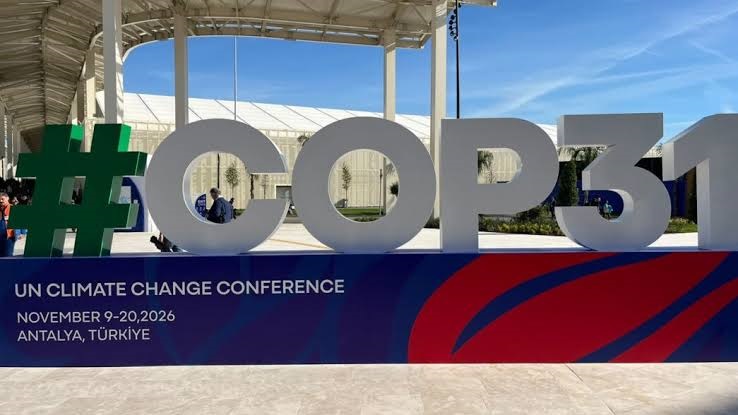
The 31st United Nations Climate Change Conference (COP31) has ended without an overarching agreement after countries failed to reach consensus on whether to include a clear commitment to transition away from fossil fuels.
The 14-day conference, which opened on November 9 in Antalya, Türkiye, was scheduled to end on November 20 but extended for nearly 48 hours as negotiations stalled over fossil fuels, climate finance and the role of carbon capture technologies in tackling climate change.
The extended negotiations made COP31 the longest UN climate conference on record, surpassing COP25 in Madrid, Spain, in 2019.
COP31 President, Murat Kurum, confirmed during the closing plenary on Sunday that the proposed final agreement would not be adopted after countries failed to bridge their differences over the text.
The European Union and several other countries rejected the proposed agreement, arguing that it failed to reflect the urgency of the climate crisis because it contained no direct reference to fossil fuels.
The EU, represented by Ireland’s Environment Minister, Darragh O’Brien, said it would not endorse an agreement that failed to mention fossil fuels, describing them as the key driver of climate change.
Norway, Panama, the Marshall Islands and other climate-vulnerable countries also objected to the proposed agreement.
Ghana, which chairs the African Group of Negotiators, raised concerns about the conduct of negotiations and the treatment of Africa’s priorities, particularly demands for increased climate finance.
However, the African group indicated that it would allow the text to be adopted in the interest of multilateralism, despite its reservations.
The disagreement over fossil fuels followed changes to successive drafts of the proposed agreement.
The first draft, released on November 16, contained explicit language calling for accelerated action to phase out fossil fuels, including an immediate transition away from fossil fuels in energy systems.
However, the second and third drafts removed direct references to fossil fuels, alongside a proposed $120 billion annual adaptation finance target for developing countries.
The fourth and final draft, released in the early hours of Sunday, November 22, also omitted an explicit commitment to transition away from fossil fuels.
Instead, it referred to the outcome of COP28 in Dubai, United Arab Emirates, where countries agreed to transition away from fossil fuels in energy systems in a just, orderly and equitable manner.
The reference, however, was insufficient for countries pushing for a stronger commitment and a clear pathway for implementation.
COP28, held in December 2023, was historic because it produced the first agreement at a UN climate conference explicitly calling for a transition away from fossil fuels after decades of negotiations that largely avoided directly mentioning coal, oil and gas.
The disagreement at COP31 also exposed wider divisions over climate finance, particularly demands by developing countries for increased financial support to adapt to the effects of climate change.
Reacting to the failure to reach consensus, United Nations Secretary-General António Guterres said he was deeply disappointed that the conference had ended without an overarching agreement.
“There may be no consensus in the negotiating room. There is no ambiguity in the science,” he said.
Guterres warned that global temperatures continued to break records, climate extremes were intensifying and greenhouse gas emissions remained too high, putting the world on course to exceed the 1.5-degree Celsius temperature limit established under the Paris Agreement.
He urged governments to accelerate the transition away from fossil fuels, increase climate finance and strengthen protection for vulnerable communities.
Former Executive Secretary of the United Nations Framework Convention on Climate Change (UNFCCC), Christiana Figueres, also described the failure to reach an agreement as deeply disappointing.
However, she said more than 130 countries had refused to endorse a deal that did not reflect the scale of the climate crisis, adding that nations had stood up for what science and climate justice demanded.
Figueres noted that progress was still being made outside the formal negotiations, particularly through the COP31 Action Agenda, which promotes climate action by governments, businesses and other non-state actors.
She also pointed to commitments and signals from around half of the global economy to increase electricity’s share of global final energy consumption to 35 per cent by 2035.
Meanwhile, Director of Power Shift Africa, Mohamed Adow, described the collapse of the negotiations as a wake-up call for the international community.
Adow accused wealthy countries of failing to provide the financing needed to accelerate climate action in developing countries.
He also criticised the EU for rejecting the proposed agreement despite what he described as its role in obstructing progress on adaptation finance and just transition negotiations.
“COP31 was a ghost COP, and its lack of progress will haunt climate-vulnerable communities in Africa and around the world,” he said.
He further criticised the failure to establish a just transition mechanism, which he said was among the key expectations from the previous climate summit in Brazil.
Despite the failure to reach an overarching agreement, some progress was made on individual negotiating issues, while initiatives under the Action Agenda continued.
The unresolved disagreements leave major political issues for further negotiations ahead of COP32, scheduled to take place in Ethiopia in November 2027.