
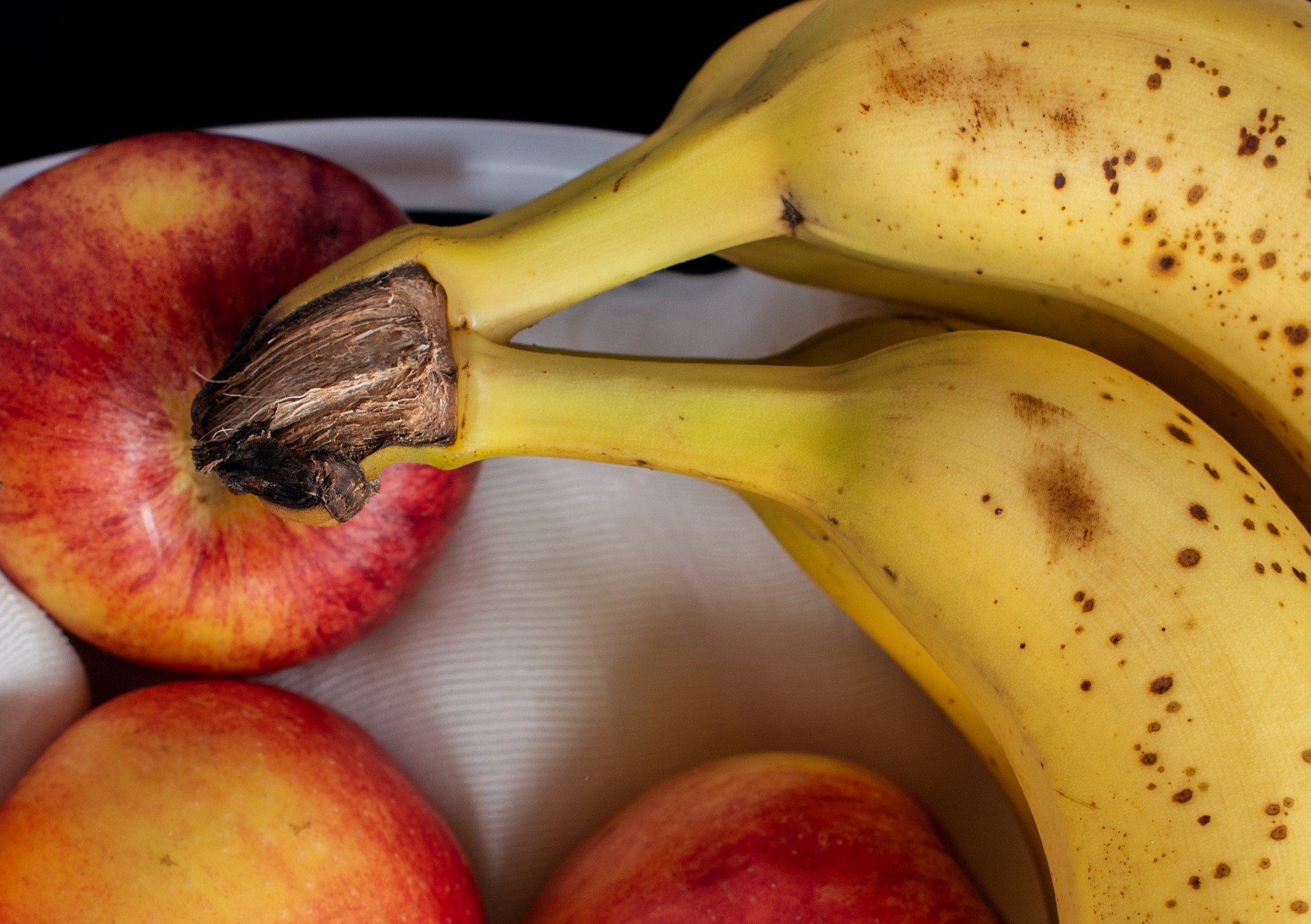
Looking at this photograph, Time Leaves Its Mark is a very simple photograph of apples and bananas. But taking a closer look at the arrangement, the photograph suggests to us something more than just apples and bananas. This is a simple way of how things change, how time leaves its traces, and how beauty doesn’t change when something is no longer perfect. Through this seemingly everyday still life, Oluwadamilola Oladapo encourages us to pay attention to details we might otherwise overlook.
The photograph brings together the golden yellows of the bananas, the very rich reds of the apples, and the dark surface of the bowl that holds this beauty. The fruit rests on a white cloth, which appears to soften the composition and gives this photograph a familiar and domestic feel. Against the darker background, these colours stand out, drawing the viewer’s eye to the fruit’s shapes and textures.
Through the small brown speckles on the banana skins, we see something specifically important that could have been missed by other artists. Rather than hiding these marks, they make them an important part of this story. They are signs of ripening that change the ordinary details that can easily go unnoticed until we stop to look. Here, they have become a reminder that time does not always announce itself dramatically; sometimes, its effects appear so slowly, one small mark at a time.
Finding Meaning in the Ordinary
This photograph does not present ripeness simply as decline. Although the apples still hold their deep reds and warm golden tones, they create a contrast with the spotted bananas. The fruit seems to occupy an in-between visibility, and it has changed, but it has never lost its appeal. This gives this photograph its quiet emotional depth and suggests that the imperfection that we see can add to beauty rather than take it away.
There is also a question here to consider: how do we decide what is worth looking at as humans and as artists? As we know, fruit is often judged by its freshness and appearance, and any mark of ageing can make it seem less desirable and reduce its price. Oladapo is asking us to pause before making that judgment from now on. By giving these small changes careful attention, this photograph turns an ordinary domestic scene into something worth looking at again.
Composition of the Passage of Time
We should consider composition without overcomplicating it. The bananas lead the eye across the frame, while the apples added pockets of red and orange. The dark bowl gives this arrangement a clear boundary, and the white cloth adds softness against the surrounding deeper tones. The close framing makes the fruit feel immediate, as though we are standing beside it and taking a closer look.
One of the photograph’s most interesting tensions is the artist’s arrangement and the natural changes taking place in and around the fruit. This still life photograph is carefully composed, but ripening and ageing cannot be fully controlled. This contrast is what gives the work room to develop. Further experiments with light, shadow and negative space might bring out even more of the relationship between the arranged scene and the gradual changes it records.
The Marks We Learned to Notice
Ultimately, time Leaves Its Mark and finds its meaning more in detail that might otherwise be dismissed as signs of imperfection. Oladapo shows us how still-life photography can do more than describe objects, how objects can invite us to think positively about change, transience and the ways our perceptions can shift over time.
The subject may be familiar, but the idea reaches beyond the fruit itself. This photograph reminds us that time not only takes things away but also leaves evidence of what has happened. By asking us to look more closely, Oladapo turns a simple arrangement into a thoughtful reflection on ageing, transformation, and the beauty that can remain along the way if we will only look more closely.