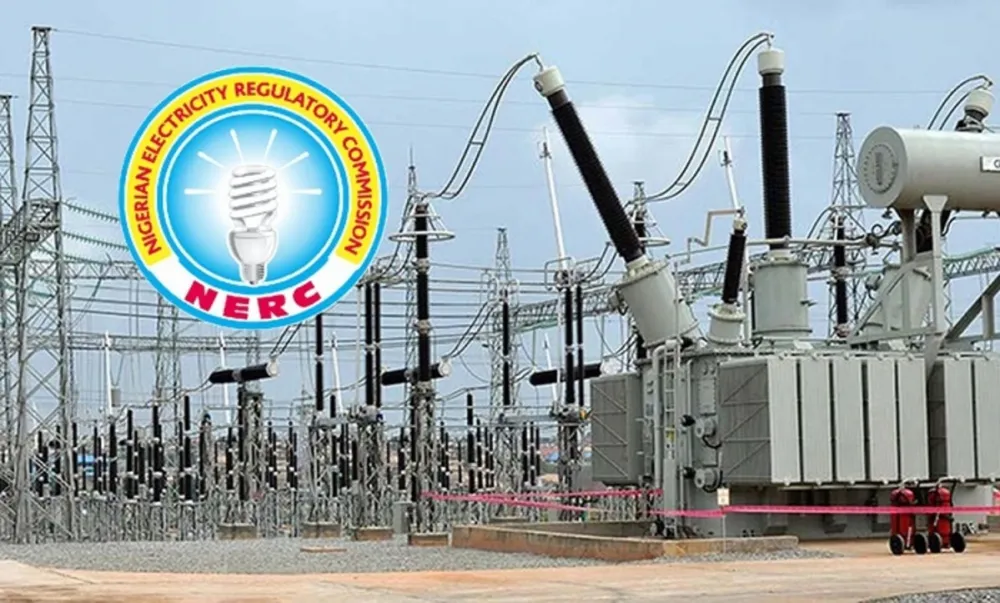
Togo, Niger and Benin owed Nigeria $11.16 million for electricity supplied by Nigerian generating companies under bilateral agreements in 2025, the Nigerian Electricity Regulatory Commission (NERC) has said.
NERC disclosed this in its 2025 annual report, which showed that the three countries paid only part of the $73.91 million invoiced for electricity-related services during the year.
According to the commission, the Market Operator issued invoices totalling $73.91 million to the international customers, but received payments of $62.75 million.
The payments represented an 84.90 per cent remittance performance, leaving an outstanding balance of $11.16 million.
NERC identified the international customers as the Société Nigérienne d’Électricité (NIGELEC) of Niger, Société Béninoise d’Énergie Électrique (SBEE) of Benin and Compagnie Énergie Électrique du Togo (CEET).
“The international bilateral customers received a total invoice of $73.91 million for ancillary services provided by the MO and made a total payment of $62.75 million, corresponding to a remittance performance of 84.90 per cent,” the Commission said.
The report also revealed that domestic bilateral electricity customers remitted N12.75 trillion against N13.20 trillion invoiced by the Market Operator for services provided in 2025.
NERC said the domestic customers recorded a 96.60 per cent remittance performance during the period.
The Commission also raised concerns over the failure of Ajaokuta Steel Company Ltd and its host community, classified as a special customer, to make payments towards electricity-related invoices.
According to NERC, Ajaokuta failed to pay a N4.96 billion invoice issued by the Nigerian Bulk Electricity Trading Plc and another N500 million invoice issued by the Market Operator.
The Commission said it had escalated the issue of continued non-payment by Ajaokuta to relevant Federal Government ministries in an effort to find a lasting solution.
NERC warned that failure to settle the debt could expose the Ajaokuta complex to disconnection by its electricity service providers on the grounds of gross indebtedness.
The report also showed that Nigeria’s distribution companies took 31,251.77 gigawatt-hours of electricity in 2025.
However, only 25,867.86 gigawatt-hours were billed to customers, resulting in a market energy accounting efficiency of 82.77 per cent.
NERC explained that energy accounting efficiency measures how effectively distribution companies account for the electricity they receive at their trading points.
The commission said the measure compares the energy billed to customers, including metered and unmetered consumers, with the total energy supplied to a given area.
Ibadan Electricity Distribution Company recorded the highest energy accounting efficiency among the DisCos at 88.84 per cent, while Enugu DisCo recorded the lowest at 72.18 per cent.
NERC urged the DisCos to develop strategies to improve their energy accounting efficiency.
It identified improved infrastructure, better customer enumeration, increased metering and the deployment of technology to reduce electricity theft as some of the measures that could help improve performance.