In Hands of the Coast, a striking piece recently showcased at the Nommo Gallery in Nakasero, Kampala, visual artist Uche Rita Okolie turns her lens toward the delicate intersection of memory, labour, and place. The artwork was presented as part of Where Memory Lives, a curated group exhibition that ran from July 1 to July 27, 2024, at the gallery located on Plot 4, Victoria Avenue.
The month-long exhibition sought to explore how memory, identity, and the relentless passage of time shape our sense of belonging. Within this broader curatorial conversation, Okolie’s work stood out for its remarkable ability to elevate a routine act of daily toil into a profound meditation on cultural survival. Her imagery avoids loud, dramatic gestures; it is quiet, direct, and deeply observant. Yet, the longer one stands before the piece, the more the photograph begins to unpack the sheer weight of physical work, environmental pressure, and inherited memory.
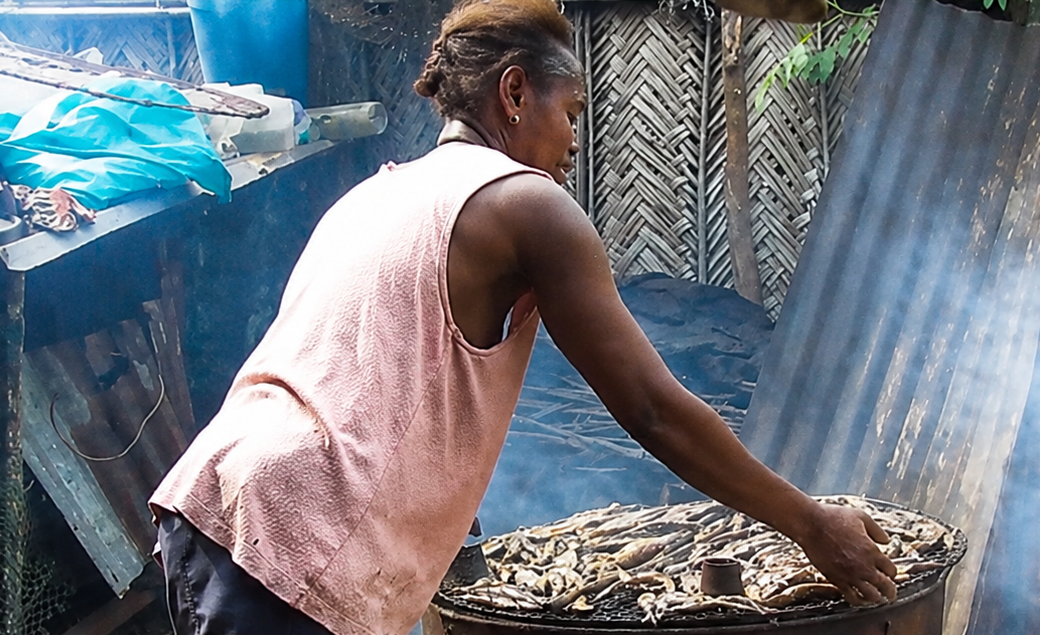
In Hands of the Coast, a solitary figure leans over a smoking vessel, entirely absorbed in the demanding task at hand. He is surrounded by the unmistakable textures of a hard-working coastal space; weathered surfaces, coarse cloth, rising smoke, and water. Crucially, the subject’s body is turned away from the camera, deliberately denying the viewer the easy intimacy of eye contact. This choice is perhaps the photograph’s greatest strength. Okolie refuses to force her subject to perform for the lens, choosing instead to let him remain undisturbed within his own daily rhythm of survival.
The power of the piece lies in this artistic restraint. The billowing smoke gently softens the harshness of the scene, while the tight posture of the worker conveys a palpable sense of physical effort and deep concentration. What might initially look like a fleeting, ordinary moment of work gradually unfolds into a larger commentary on communities whose entire existence is anchored to the shoreline. Okolie’s coast is far from a postcard landscape; it is a living archive of labour, survival, and knowledge passed down through generations.
The material form of the artwork further deepens its narrative. Crafted as a batik on an archival photograph on cotton, Hands of the Coast pushes past the boundaries of a standard photographic print. The integration of batik introduces a traditional vocabulary of handwork, pattern, and textile memory, while the cotton base gives the image a tactile, physical presence. In essence, the photograph becomes a worked surface in its own right, carrying the literal evidence of human making and beautifully echoing the manual labour depicted within the frame.
This tight bond between the subject matter and the physical medium is central to the project. Okolie does not simply document labour from a distance; she creates an object that itself bears the physical trace of human hands. The hand is present in the scene, embedded in the process, and felt on the surface. This makes Hands of the Coast a perfect anchor for an exhibition titled Where Memory Lives. For Okolie, memory does not merely exist as an abstract concept in the mind; it lives actively in repeated physical gestures, inherited skills, fragile ecosystems, and the very materials used to preserve our stories.
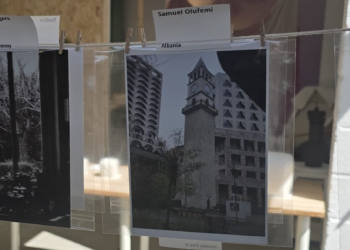
When viewed within the wider gallery space, Okolie’s piece entered into a lively dialogue with neighboring artworks that wrestled with themes of architecture, migration, departure, and remembered places. While the exhibition brought together vastly different visual approaches to the past, Okolie provided a vital, water-bound perspective. Her contribution served as a timely reminder to Kampala’s art enthusiasts that memory is not always monumental or cast in bronze. More often than not, it is found in the quiet persistence of ordinary labour, the rising smoke of a workspace, the bend of a tired back, and the resilience of those who live close to the water.
The title itself, Hands of the Coast, carries significant weight. It points directly to the human agency that actively shapes coastal life. The shoreline in Okolie’s vision is never empty scenery, it has hands. It is a place continuously touched, worked, protected, and remembered by the people who depend on it for their daily bread. The title also allows the lone figure to represent something much larger than himself: a collective community of workers, makers, and keepers of local heritage.
The image ultimately succeeds because it completely rejects cheap sentimentality. The worker is treated with immense dignity, but he is never romanticized. While there is an undeniable aesthetic beauty in the interaction of smoke, colour, and textile texture, Okolie does not hide the inherent pressure in the body’s posture or the demanding conditions of the environment. This careful balance gives the artwork its critical edge.
As a contribution to the Where Memory Lives exhibition, Uche Rita Okolie’s Hands of the Coast offered a highly thoughtful exploration of identity and place. It demonstrated how a single, well-crafted image can capture the immense complexities of daily survival and cultural continuity. Through a quiet coastal scene brought to life in the heart of Kampala, Okolie successfully shines a spotlight on the people and everyday practices that keep collective memory alive.